Why Choose an LED Display Factory in China?
Choosing an LED display factory China can offer practical advantages for buyers seeking reliable technology, flexible production, and competitive project costs. China has developed a mature LED manufacturing ecosystem, supported by component suppliers, experienced engineers, and specialized assembly facilities. This concentration can shorten sourcing cycles and simplify communication between design, production, and shipping teams.
A qualified factory should provide more than an attractive quotation. Buyers should examine LED chip quality, cabinet materials, brightness consistency, refresh rate, power protection, and thermal design. Ask for recent project references. Request sample testing. Review factory certifications, quality-control procedures, warranty terms, and inspection records before placing a large order. These steps reveal how the supplier handles real pressure, not only polished sales presentations.
Details matter. An experienced team may check cabinet alignment with a laser tool, test modules for several hours, and record brightness data before shipment. Engineers should also explain installation, maintenance, spare parts, and control-system compatibility in clear language. This support becomes especially valuable for outdoor advertising, stadiums, retail stores, and live events.
However, choosing a Chinese supplier is not automatically risk-free. Not every factory delivers the same result. Some companies outsource critical processes or overstate production capabilities. A low price may hide weaker components, limited testing, or slow after-sales support. Buyers need patience and evidence. Factory videos are useful, but independent inspections are better. The strongest partnership comes from transparent specifications, documented testing, realistic timelines, and regular communication. That is why an LED display factory China should be evaluated as a long-term technical partner, not simply as the cheapest available source.
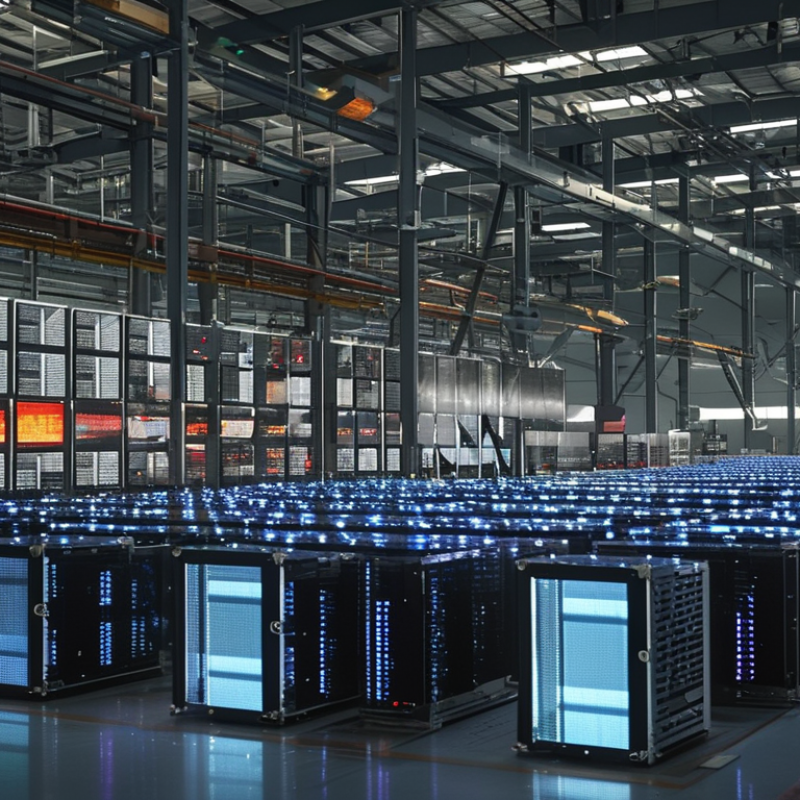
China’s LED Display Industry: Over 70% of Global Production Capacity
Why Choose an LED Display Factory in China?
China’s LED display industry holds more than 70% of global production capacity, according to industry assessments referenced by TrendForce and the China LED Display Application Association. This concentration is not accidental. China has dense supply networks for LED chips, driver ICs, cabinets, power systems, and control equipment. Components can often move between nearby factories within hours, reducing delivery delays and coordination costs.
Capacity is not quality.
A capable factory should provide measurable evidence. Ask for brightness test records, cabinet flatness data, pixel failure rates, and aging-test photographs. International reports from TrendForce also show strong demand for fine-pitch and outdoor LED displays, especially in commercial spaces, transport hubs, and sports venues. Chinese manufacturers produce these formats at scale, supporting flexible pixel pitches, cabinet sizes, and installation structures.
The practical advantage appears during customization. Engineers can adjust module masks, maintenance access, waterproofing, and cable routes before mass production. In factory visits, small details matter: clean solder joints, consistent module gaps, labeled power lines, and realistic burn-in tests. However, large capacity can create confusion. Some suppliers rely on impressive samples but provide weak documentation. Buyers should compare technical drawings, inspection procedures, warranty terms, and independent test results. The “over 70%” figure is useful, but it should never replace careful verification.
Compare Key Specs: 1,000–6,000 nits and 3,840 Hz Refresh Rates
Choosing an LED display factory in China becomes clearer when specifications match the installation site. Brightness is often the first visible difference. Outdoor screens may require 4,000 to 6,000 nits under direct sunlight, while sheltered venues can use 1,000 to 2,500 nits. Higher brightness is not automatically better. It can increase power demand and look harsh indoors.
Refresh rate deserves equal attention. A 3,840 Hz refresh rate can reduce visible scan lines and flicker in camera footage. This matters for live events, retail displays, and recorded interviews. During factory evaluation, request test videos, brightness measurements, and cabinet-level power data. Check whether readings were taken after calibration. That detail is easy to miss. A reliable supplier should explain module consistency, thermal control, and control-system compatibility clearly.
Factory visits or independent inspections can reveal assembly discipline. Look for stable color across panels, clean soldering, protected connectors, and burn-in records. Still, specifications can mislead. A screen rated at 6,000 nits may be unsuitable when viewers sit nearby. Practical evaluations often expose problems with heat, glare, and operating costs. Ask for a real sample under expected lighting. Manufacturing scale can support customization, but quality depends on documented testing and responsive engineering.
Why Choose an LED Display Factory in China? – Compare Key Specs: 1,000–6,000 nits and 3,840 Hz Refresh Rates
A practical comparison of brightness, refresh rate, pixel pitch, protection, and typical application scenarios.
| Display Category | Typical Brightness | Refresh Rate | Common Pixel Pitch | Recommended Environment | Key Selection Notes |
| Indoor Fine-Pitch LED | 1,000–1,500 nits | 1,920–3,840 Hz | P0.9–P2.5 | Control rooms, meeting rooms, retail spaces, studios | Lower brightness helps reduce glare indoors; fine pixel pitch supports close viewing distances. |
| Indoor Commercial LED | 1,200–2,000 nits | 2,880–3,840 Hz | P1.5–P4.0 | Shopping centers, airports, reception areas, museums | Balances image clarity, viewing distance, power consumption, and installation cost. |
| Outdoor Standard LED | 4,000–5,000 nits | 1,920–3,840 Hz | P4–P10 | Building facades, roadside advertising, public squares | Higher brightness improves daytime visibility; weather protection and thermal design are essential. |
| Outdoor High-Brightness LED | 5,000–6,000 nits | 2,880–3,840 Hz | P3.9–P8 | Direct-sunlight locations, stadium exteriors, transport hubs | Suitable for strong ambient light; brightness control should be used to limit unnecessary power consumption. |
| Live Event Rental LED | 3,500–5,000 nits | 3,840 Hz | P2.6–P4.8 | Concerts, conferences, exhibitions, broadcast stages | High refresh rates help reduce scan lines and flicker during camera capture; lightweight cabinets support frequent setup. |
Key Specification Comparison
| Specification | Practical Range or Value | Why It Matters | What to Verify Before Ordering |
| Brightness | 1,000–6,000 nits | Determines visibility under indoor lighting or direct sunlight. | Ask whether the value is typical or maximum, and confirm calibration and brightness uniformity. |
| Refresh Rate | Up to 3,840 Hz | Supports smoother motion and cleaner camera images when paired with suitable processing equipment. | Confirm the refresh rate at the intended resolution, scan mode, and grayscale setting. |
| Ingress Protection | Common outdoor designs: IP65 front / IP54 rear | Helps protect modules and electronics against dust and water exposure. | Check the exact certified rating for the complete cabinet, not only individual components. |
| Color Grayscale | Typically 14–16 bit processing support | Improves tonal transitions and reduces visible banding in gradients. | Request test images or video covering dark tones, skin tones, and smooth gradients. |
| Cabinet Serviceability | Front, rear, or dual maintenance | Affects installation space, repair time, and long-term maintenance cost. | Confirm spare-part access, module replacement procedure, and maintenance clearance. |
Potential Advantages of Working with a China-Based LED Display Factory
- Broad access to established LED display component and assembly supply chains.
- Flexible customization of cabinet dimensions, pixel pitch, brightness, connectors, and control configurations.
- Options for prototype production, sample testing, and larger-volume manufacturing.
- Integrated engineering support for cabinet design, thermal management, power distribution, and installation structure.
- Potentially shorter procurement cycles when standard modules and cabinets are available.
- Important: compare verified test reports, warranty terms, quality-control procedures, spare-parts support, and total landed cost rather than price alone.
Note: Brightness and refresh-rate values are representative specification ranges for common LED display categories. Actual performance depends on LED package, driving IC, receiving card, calibration, scanning mode, ambient conditions, and system configuration.
Verify Quality Standards: IP65 Protection and ±0.1 mm Cabinet Tolerance
Why Choose an LED Display Factory in China?
Quality verification should begin with measurable requirements, not attractive product photos. IEC 60529 defines IP65 as dust-tight protection and resistance to water jets. It does not permit immersion. During factory audits, ask for test records, nozzle pressure, test duration, and enclosure samples. A cabinet that survives a brief spray may still fail after repeated outdoor exposure.
Cabinet tolerance also deserves close attention. A ±0.1 mm requirement can reduce visible gaps between modules and improve installation alignment. Technicians should verify frame dimensions with calibrated digital gauges at several points. Check corners, locking holes, and mounting surfaces. One measurement is not enough. Factory quality teams should record results using a controlled inspection plan, ideally linked to ISO 9001 procedures.
Market pressure makes this discipline increasingly important. A 2024 MarketsandMarkets report estimated the global LED display market at about USD 9.4 billion, with projected growth to approximately USD 15.1 billion by 2029. More installations mean less tolerance for inconsistent manufacturing. Chinese factories often combine CNC processing, automated assembly, and export-oriented testing. Still, automation does not guarantee perfect cabinets. Thermal expansion, coating thickness, and rushed inspection can affect final accuracy. That uncomfortable detail matters. Buyers should request sample cabinets, third-party verification, and corrective-action records before approving mass production.
Why Choose an LED Display Factory in China?
Verify quality standards through IP65 protection and precise cabinet assembly with a dimensional tolerance of ±0.1 mm.
IP65 consists of two IEC 60529 protection ratings: level 6 for complete protection against dust ingress and level 5 for protection against water jets from any direction. The ±0.1 mm cabinet tolerance is a separate dimensional acceptance requirement used to support accurate panel alignment and consistent installation.
