7 Best Sodium Pyrosulfite Manufacturers for Global Buyers
Sodium Pyrosulfite, commonly called sodium metabisulfite, is a practical chemical for water treatment, food processing, mining, and industrial cleaning. Its formula is Na2S2O5, and its CAS number is 7681-57-4. Buyers must examine more than price. Purity, sulfur dioxide content, moisture, heavy metals, packaging, and shipment stability can affect performance.
Industry assessments from Grand View Research and Mordor Intelligence describe sodium metabisulfite as an established chemical used across water treatment, food, pulp, and mining applications. The European Chemicals Agency provides substance information that supports careful classification, labeling, and handling decisions. Food and beverage buyers should also check applicable Codex guidance and local additive regulations. Requirements can differ by destination.
This guide reviews seven Sodium Pyrosulfite manufacturers for global buyers. The comparison considers production experience, quality systems, export capability, documentation, and customer support. Typical supply formats include 25-kilogram bags and larger industrial containers. A dependable manufacturer should provide a current specification sheet, safety data sheet, batch certificate, and traceability records. ISO certification may help, but it does not automatically prove every product claim.
“Best” is not absolute. A mining customer may prioritize volume and logistics, while a food processor may require tighter impurity controls. Some supplier information is difficult to verify publicly. That limitation deserves attention. Buyers should request recent test results, confirm regulatory suitability, and evaluate samples before signing a long-term contract. Small details matter, including sealed inner liners, pallet condition, and visible batch markings.
Chemical Profile: Na₂S₂O₅, CAS 7681-57-4, E223, Molecular Weight 190.11
Sodium pyrosulfite, commonly called sodium metabisulfite, has the formula Na₂S₂O₅. Its CAS number is 7681-57-4, and its food additive code is E223. The molecular weight is 190.11 g/mol. It usually appears as a white or pale crystalline powder. A noticeable sulfur dioxide odor may occur, especially when the material meets moisture or acidic conditions.
For global purchasing, this chemical profile should guide supplier evaluation. Buyers should request an updated certificate of analysis showing assay, sulfite content, iron, heavy metals, moisture, and insoluble matter. Food-grade material also needs suitable documentation for the destination market. E223 acceptance varies by country and application. Check the current local rules.
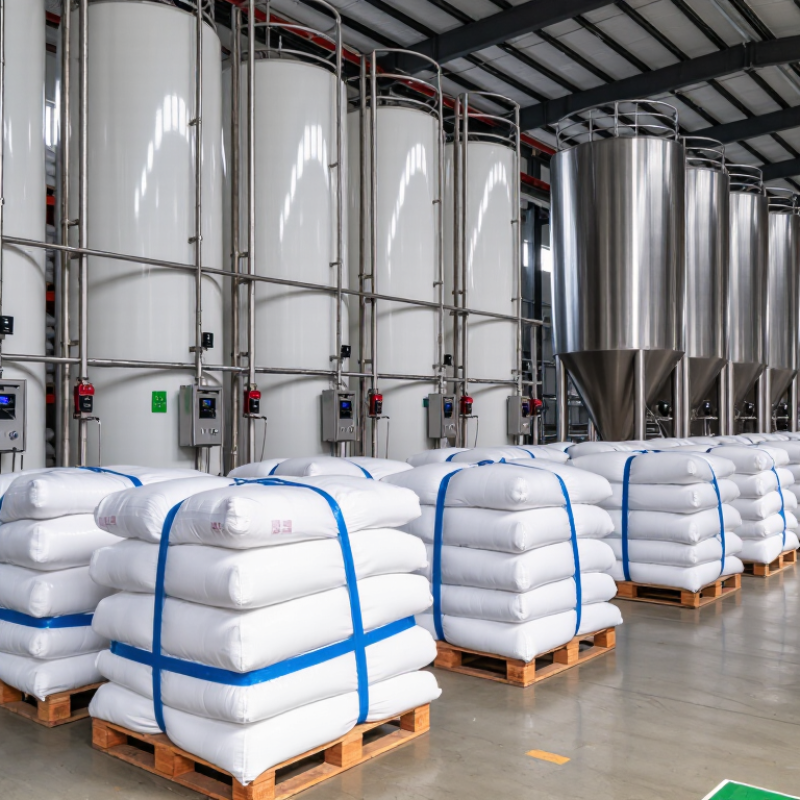
Storage details matter. Keep the product sealed, dry, and away from acids, heat, and incompatible oxidizing materials. Good packaging often uses moisture-resistant inner liners inside strong bags or drums. During inspection, damaged seals or caked powder deserve attention. They may indicate moisture exposure. The product can still look acceptable, but performance may be reduced. That is an easy mistake.
Reliable manufacturers should provide consistent batch records, traceability, safety data sheets, and clear transport guidance. Ask about production capacity and sampling procedures before placing a large order. Small details matter here. A low price does not prove quality, while a polished specification sheet does not replace independent testing. Handle the powder with suitable ventilation and personal protective equipment, following the applicable safety data sheet.
7 Best Sodium Pyrosulfite Manufacturers for Global Buyers
Chemical Profile: Na₂S₂O₅ · CAS 7681-57-4 · E223 · Molecular Weight 190.11 g/mol
This chart shows the elemental mass contribution of sodium pyrosulfite based on its molecular formula Na₂S₂O₅ and the standard molecular weight of 190.11 g/mol. Oxygen contributes the largest share, followed by sulfur and sodium.
Product Benchmarks: 96–99% Purity, SO₂ Release, and Moisture Limits
7 Best Sodium Pyrosulfite Manufacturers for Global Buyers
Product Benchmarks: 96–99% Purity, SO₂ Release, and Moisture Limits
For global buyers, sodium pyrosulfite should be evaluated as sodium metabisulfite, Na₂S₂O₅. Commercial assay commonly ranges from 96% to 99%. The FAO/WHO JECFA specification framework emphasizes assay, sulfur dioxide content, and impurity control rather than appearance alone. A clean white powder is useful, but it proves little.
SO₂ release is a practical benchmark. Pure sodium metabisulfite can theoretically release about 67.4% sulfur dioxide by mass. At 96–99% assay, the expected range is roughly 64.7–66.7%. Ask for a recent certificate of analysis and the test method. Titration results can vary when samples absorb moisture. Small details matter.
Moisture should usually remain near or below 0.5–1.0%, depending on the agreed specification. The Food Chemicals Codex and JECFA-style controls support checking water, sulfite strength, and heavy-metal limits together. Packaging also matters: lined bags, sealed pallets, and dry storage reduce caking and SO₂ loss. A high assay can still mislead if moisture rises during transit. Independent laboratory verification is worth considering for every new shipment.
Seven Manufacturer Profiles: Capacity, Export Reach, Grades, and Certifications
Seven manufacturer profiles reveal different strengths for global sodium pyrosulfite buyers. A coastal producer offers 30,000 tonnes annually, technical and food-processing grades, and regular shipments across Asia and Europe. An inland plant supplies about 18,000 tonnes, with reagent-grade packaging and ISO 9001 certification. Its export reach remains narrower, mainly serving regional distributors. A third producer reports 25,000 tonnes of capacity and provides food-grade material under FSSC 22000 procedures. Batch traceability is strong.
A fourth manufacturer focuses on smaller orders, with approximately 8,000 tonnes of annual capacity. It supports private-label packing, pallet customization, and certificates of analysis for each lot. A fifth supplier operates two production lines and exports to Africa, the Middle East, and South America. It lists technical and food-processing grades, plus Halal and Kosher documentation. A sixth plant handles around 40,000 tonnes yearly and maintains ISO 9001 and ISO 14001 systems. Its bulk deliveries suit large water-treatment and industrial customers.
The seventh manufacturer emphasizes laboratory and high-purity grades. Its capacity is lower, near 5,000 tonnes, but packaging controls are more detailed. Export documents usually include safety data sheets, origin certificates, and test results for purity, iron, and moisture. Buyers should verify current certificates directly. Capacity figures can change after maintenance or raw-material shortages. A certificate alone does not prove consistent quality. I would request recent batch records, container photographs, and an independent sample test before signing a long-term contract.
Application Fit: Food, Water Treatment, Mining, and Textile Processing
7 Best Sodium Pyrosulfite Manufacturers for Global Buyers
Application fit matters more than a low quotation. Sodium pyrosulfite, commonly called sodium metabisulfite, serves different technical needs across industries. In food processing, buyers should request food-grade documentation, assay results, sulfite limits, allergen statements, and batch traceability. The Codex General Standard for Food Additives lists sulfites as regulated additives, so supplier documentation must match the destination market. A clean certificate of analysis is essential.
Water treatment requires reliable dissolution, controlled impurities, and consistent packaging. The UN World Water Development Report 2024 notes that agriculture represents roughly 70% of global freshwater withdrawals, increasing pressure on treatment efficiency. Mining operations often need stable reducing performance in flotation or process-water circuits. Buyers should check iron, heavy metals, moisture, and particle size before approving bulk supply. Textile processors may prioritize repeatable reduction performance, especially when removing excess dye from fabric.
The FAO AQUASTAT database also highlights widening water stress across industrial regions. That makes practical storage guidance important. Dry warehouses, sealed bags, and pallet protection prevent caking and performance loss. Seven manufacturers may appear similar on paper. They are not always equivalent in field use. I would compare three production batches, not one sample. That extra step can expose uneven purity, weak packaging, or delayed technical support. Supplier audits, ISO-based quality systems, safety data sheets, and export experience provide stronger evidence than polished marketing claims. Cost still matters, but application failure costs more.
Global Buyer Checklist: COA, SDS, REACH, ISO 9001, MOQ, and Incoterms
When comparing the 7 best sodium pyrosulfite manufacturers, global buyers should begin with product evidence, not sales claims. Request a recent Certificate of Analysis (COA) for each batch. Check assay, moisture, appearance, packaging, production date, and test methods. A clean COA matters.
The Safety Data Sheet (SDS) should match the exact product and concentration. It must explain handling, storage, transport classification, exposure controls, and emergency measures. Ask whether the material supports REACH requirements for your destination market. Registration status can differ by importer, volume, and intended use. Do not rely on a copied PDF. Check its revision date.
ISO 9001 certification can indicate controlled procedures, but certification alone does not prove consistent quality. Ask for the certificate scope and issuing body. Confirm the MOQ, pallet configuration, lead time, shelf life, and sample policy before negotiating price. Incoterms also deserve careful attention. FOB, CIF, and DDP shift costs, insurance, customs duties, and risk at different points. Compare landed cost, not only the invoice price. A low offer still tempts buyers, sometimes unfairly. I would also verify the manufacturing address, batch traceability, and responsiveness to technical questions. One weakness remains: documents can look complete while actual packaging fails inspection. A pre-shipment sample or independent test may be worth the extra cost.
