Icon about-block-ico-1 Icon about-block-ico-2 Icon about-block-ico-3 Icon about-block-ico-4 Icon announcement-close Icon arrow-left Icon arrow-right Icon arrow-sm Icon asterisk Icon banner-transparent-vector Icon btn-callback-ico Icon careers-item-location Icon careers-item-time Icon careers-item-type Icon careers-mail-ico Icon careers-phone-ico Icon careers-search-ico Icon careers-single-hero-vector Icon careers-single-more-vector Icon careers-vector Icon check Icon close Icon dfm-image-left-vector Icon dfm-image-right-vector Icon document Icon download-popup-vector Icon dropdown Icon envelope Icon facebook Icon faq-banner-bg Icon faq-title-ico-active Icon faq-title-ico Icon featured-links-block-bg Icon figure-1 Icon figure-10 Icon figure-11 Icon figure-12 Icon figure-13 Icon figure-14 Icon figure-15 Icon figure-2 Icon figure-3 Icon figure-4 Icon figure-5 Icon figure-6 Icon figure-7 Icon figure-8 Icon figure-9 Icon file-upload Icon form-sidebar-back Icon form-step-done Icon gmap-marker-group-icon Icon gmap-marker-icon Icon header-profile-ico Icon instagram Icon link Icon linkedin Icon loader Icon mail Icon phone Icon play-yt Icon play Icon post-nav-arr-left Icon quote-banner-vector Icon quote-block-aside-vector Icon quote-contact-phone-ico Icon quote-contact-position-ico Icon sidebar-location Icon sidebar-phone Icon technology-banner-nav-left-vector Icon technology-banner-nav-right-vector Icon twitter Icon webinar-item-date-vector Icon whitepaper-img-ico-left Icon whitepaper-img-ico-right Icon whitepapers-listing-banner-ico Icon whitepapers-single-aside-vector Icon youtube Icon yt-play-button

Top 10 Bridge Gantry Crane Manufacturers Worldwide

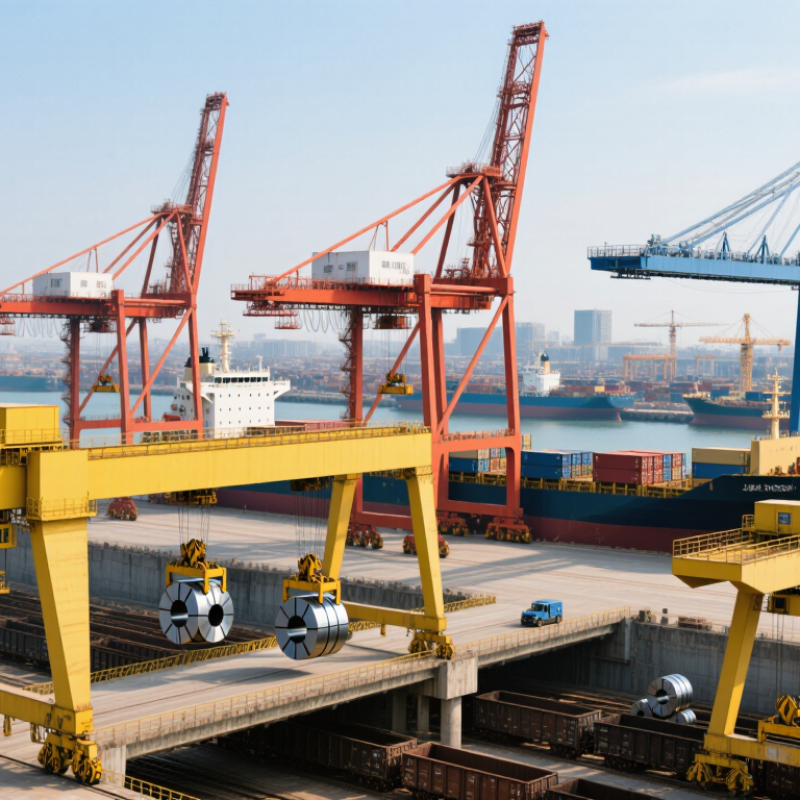
Bridge Gantry cranes support demanding workflows across ports, shipyards, steel plants, rail terminals, and large construction sites. Their elevated structure spans work areas, while powered trolleys move heavy loads with controlled precision. Manufacturers must therefore deliver more than lifting capacity. They must prove structural reliability, safety engineering, after-sales support, and compliance with recognized standards.

Market research shows why this sector deserves careful evaluation. Grand View Research identifies material handling equipment as a major industrial market, driven by warehouse expansion, infrastructure investment, and automation. Fortune Business Insights also reports continued growth in the global crane market, supported by construction, manufacturing, logistics, and port modernization. IMARC Group highlights similar demand for automated and electrically operated lifting systems. Exact market figures vary between reports, however. Definitions, regional coverage, and forecasting methods are not identical.

That matters.

This article, “Top 10 Bridge Gantry Crane Manufacturers Worldwide,” compares leading companies through practical criteria. These include rated load capacity, span options, duty classification, control systems, installation experience, maintenance networks, and documented safety performance. A 50-ton crane serving a steel mill faces different demands than a lighter unit operating inside a logistics terminal. Real conditions matter: corrosive sea air, frequent starts, uneven rails, temperature changes, and limited maintenance access can all affect performance.

No universal ranking exists. A supplier may lead in automation but lack strong regional service coverage. Another may offer robust custom engineering at a higher lifecycle cost. The comparison therefore combines manufacturer information, industry data, technical specifications, and buyer-focused judgment. Readers should verify certifications, site references, spare-parts availability, and local support before making a procurement decision. Reliability is not a slogan; it is measured over years of lifting cycles.
Top 10 Bridge Gantry Crane Manufacturers Worldwide

Bridge Gantry Cranes: Types, Components, and ISO 4301-1 Duty Classes

Bridge Gantry Cranes: Types, Components, and ISO 4301-1 Duty Classes

Bridge gantry cranes move loads across yards, workshops, ports, and fabrication halls. A full gantry runs on ground rails, while a semi-gantry uses one elevated runway. Single-girder designs suit lighter loads and shorter spans. Double-girder frames provide greater headroom and lifting capacity. The main components include girders, legs, end carriages, wheels, hoist, trolley, brakes, controls, and power collectors. Small details matter. Misaligned rails can cause vibration, wheel wear, and unsafe travel.

ISO 4301-1 classifies crane usage through utilization and load spectrum. Its combined classes range from A1 to A8. A low-duty A1 crane may handle occasional light lifts. An A8 crane faces frequent, demanding cycles with heavier loads. Engineers should calculate operating cycles, average lifted weight, travel distance, and starts per hour.

Choosing only by maximum capacity is a common mistake. A 20-ton crane may be unsuitable for repetitive 15-ton lifts.

A 2024 Grand View Research analysis valued the global crane market at approximately 48 billion US dollars in 2023. This broader figure includes mobile and tower cranes, but it confirms strong investment in lifting infrastructure. Market growth does not remove design uncertainty. Field inspections often find underestimated corrosion, poor drainage, or neglected brakes. ISO classification helps, yet real operating records should challenge the original specification.

Expect the unexpected.

Ranking Criteria: SWL, Span, Lift Speed, Safety, and EN 15011 Compliance

Top 10 Bridge Gantry Crane Manufacturers Worldwide

This ranking measures more than headline lifting capacity. Safe Working Load (SWL) receives the highest weight, because an overloaded bridge gantry crane can deform beams, damage wheels, and endanger operators. Span matters too. A 30-metre span demands stronger structural control than a compact workshop crane. MarketsandMarkets’ 2024 overhead crane study identifies manufacturing, warehouses, and energy projects as major demand sectors, each requiring different load profiles.

Lift speed is assessed against control quality, not speed alone. A fast hoist is useful in repetitive production, but smooth starting and stopping protect suspended loads. Safety scoring includes overload protection, emergency stops, limit switches, anti-collision systems, and inspection access. Very fast equipment is not automatically better. That assumption needs challenging.

EN 15011 compliance is essential for European-facing projects. Manufacturers should provide design calculations, risk assessments, operating instructions, and traceable testing records. Independent inspection strengthens reliability. The European Agency for Safety and Health at Work repeatedly links poor maintenance and inadequate training with lifting-equipment incidents, so documentation cannot be treated as paperwork. Span, SWL, lift speed, safety functions, and EN 15011 conformity are scored together. A crane with excellent capacity but weak service access should lose points. No ranking is perfect; site temperature, duty class, floor tolerance, and operator skill can change the result.

Top 10 Global Bridge Gantry Crane Manufacturers by Capacity and Reach

Top 10 Bridge Gantry Crane Manufacturers Worldwide

The top ten global bridge gantry crane manufacturers are best compared by lifting capacity and working reach, not reputation alone. Heavy industrial suppliers commonly engineer systems from 20 to over 500 tonnes. Their designs serve shipyards, steel plants, ports, and large construction sites. Some specialized units exceed 1,000 tonnes, but these projects require detailed structural verification.

Capacity is only one part of the assessment. A crane with a 40-metre span may suit a fabrication hall, while a 100-metre reach can support outdoor container handling. Engineers also examine lifting height, wheel loads, duty class, wind exposure, and runway alignment. Small errors matter. A few millimetres of rail misalignment can increase wheel wear and vibration.

The strongest manufacturers usually provide custom calculations, load testing, operator training, and long-term inspection support. Their international experience helps adapt cranes to different climates and electrical systems. Still, published capacity figures can be difficult to compare fairly. Some suppliers quote maximum static loads, while others emphasize regular working capacity. This ranking should therefore remain practical rather than absolute. Site conditions may change the order. A lower-capacity crane can be the better choice when its reach, control system, and maintenance access match the job more precisely.

Top 10 Global Bridge Gantry Crane Manufacturers by Capacity and Reach

This anonymized benchmark compares representative maximum rated lifting capacities and maximum bridge spans reported across major global bridge gantry crane product ranges. The figures indicate engineering capability rather than market share.

Capacity is measured in metric tonnes, while reach is represented by maximum bridge span in metres. Actual operating capacity depends on duty class, lifting speed, runway configuration, environmental conditions, and site requirements.

Regional Comparison Using FEM 1.001 Classes and ASME B30.2 Standards

Top 10 Bridge Gantry Crane Manufacturers Worldwide

Regional Comparison Using FEM 1.001 Classes and ASME B30.2 Standards

Comparing the top ten bridge gantry crane manufacturers requires more than checking lifting capacity. FEM 1.001 classifies crane duty through load spectra, working cycles, and component stress. Its groups help engineers match equipment with real production demands. A crane serving a steel mill needs different endurance from one used in a quiet warehouse. That difference appears in motors, brakes, wheels, and welded box girders.

ASME B30.2 focuses on overhead and gantry crane safety in the United States. It addresses design-related safeguards, inspection practices, operating controls, and personnel protection. European manufacturers often present FEM classifications, while North American projects may request ASME-based compliance evidence. These systems should not be treated as identical. A regional comparison must review calculations, inspection records, emergency stops, limit switches, and operator visibility. Small details matter.

Look closely.

In Southeast Asia and the Middle East, dust, heat, and uneven maintenance can affect service life. Northern European installations may face cold starts, strict documentation, and high automation expectations. A manufacturer’s technical authority should appear in signed calculations, traceable material certificates, and practical commissioning records. Site experience also matters. I would question any ranking built only on export volume. Some published performance figures look precise, yet omit duty cycles or ambient conditions. That is a weakness worth challenging. Buyers should request FEM class assumptions and ASME B30.2 compliance boundaries before comparing prices, delivery times, or warranty promises.

Applications, Inspection Requirements, and Total Cost of Ownership Metrics

When comparing the top 10 bridge gantry crane manufacturers worldwide, buyers should examine application fit before headline capacity. Steel plants need high duty cycles, precise positioning, and heat-resistant components. Warehouses usually prioritize speed, low noise, and compact runway design. Port environments demand corrosion protection and reliable outdoor controls. I have seen specifications fail when duty class is treated as a marketing label.

Inspection planning must match actual use. OSHA 29 CFR 1910.179 requires frequent inspections at daily-to-monthly intervals and periodic inspections every one to twelve months, depending on service conditions. ISO 9927-1 also recognizes daily, frequent, periodic, and exceptional inspections. Inspectors should record brake response, hook deformation, wire-rope wear, limit switches, runway alignment, and emergency stops. A five-minute visual check can reveal a serious defect.

Total cost of ownership extends beyond purchase price. Use this practical model: purchase, installation, energy, inspections, spare parts, downtime, training, and disposal. Track availability, cost per operating hour, maintenance cost per lift, and unplanned-stop hours. MHI’s 2024 Annual Industry Report identifies labor availability and operating efficiency as major supply-chain investment pressures. That supports automation, but not blindly. A low-cost crane may consume more energy and require costly retrofits. A spreadsheet can still lie. Buyers should request five-year maintenance histories, inspection records, duty-cycle assumptions, and documented service-response times before ranking suppliers.

MSIRobot