Icon about-block-ico-1 Icon about-block-ico-2 Icon about-block-ico-3 Icon about-block-ico-4 Icon announcement-close Icon arrow-left Icon arrow-right Icon arrow-sm Icon asterisk Icon banner-transparent-vector Icon btn-callback-ico Icon careers-item-location Icon careers-item-time Icon careers-item-type Icon careers-mail-ico Icon careers-phone-ico Icon careers-search-ico Icon careers-single-hero-vector Icon careers-single-more-vector Icon careers-vector Icon check Icon close Icon dfm-image-left-vector Icon dfm-image-right-vector Icon document Icon download-popup-vector Icon dropdown Icon envelope Icon facebook Icon faq-banner-bg Icon faq-title-ico-active Icon faq-title-ico Icon featured-links-block-bg Icon figure-1 Icon figure-10 Icon figure-11 Icon figure-12 Icon figure-13 Icon figure-14 Icon figure-15 Icon figure-2 Icon figure-3 Icon figure-4 Icon figure-5 Icon figure-6 Icon figure-7 Icon figure-8 Icon figure-9 Icon file-upload Icon form-sidebar-back Icon form-step-done Icon gmap-marker-group-icon Icon gmap-marker-icon Icon header-profile-ico Icon instagram Icon link Icon linkedin Icon loader Icon mail Icon phone Icon play-yt Icon play Icon post-nav-arr-left Icon quote-banner-vector Icon quote-block-aside-vector Icon quote-contact-phone-ico Icon quote-contact-position-ico Icon sidebar-location Icon sidebar-phone Icon technology-banner-nav-left-vector Icon technology-banner-nav-right-vector Icon twitter Icon webinar-item-date-vector Icon whitepaper-img-ico-left Icon whitepaper-img-ico-right Icon whitepapers-listing-banner-ico Icon whitepapers-single-aside-vector Icon youtube Icon yt-play-button

10 Spare Tire Tips for Global Buyers

A Spare Tire can turn a roadside delay into a manageable stop, but only when it fits the vehicle and is ready to use. For global buyers, choosing one involves more than comparing prices. Vehicle specifications, driving conditions, storage space, and local service options all matter. A tire that looks suitable online may not match the wheel, load rating, or clearance requirements in the owner’s manual. Small details count.

This guide covers ten practical checks, from identifying the correct size to inspecting pressure and tread before a trip. It also explains how compact temporary spares differ from full-size replacements, and why a jack and lug wrench should be checked alongside the tire. On a rainy shoulder, a missing tool can matter as much as a flat tire. Preparation helps.

Buyers should confirm fitment with the vehicle manufacturer or a qualified tire professional, especially when specifications are unclear. Climate and road conditions may affect storage and maintenance, so avoid assuming one setup works everywhere. Even a well-kept spare can age, lose pressure, or be damaged out of sight. I have to admit, spare-tire checks are easy to postpone. A simple inspection schedule makes them harder to forget.
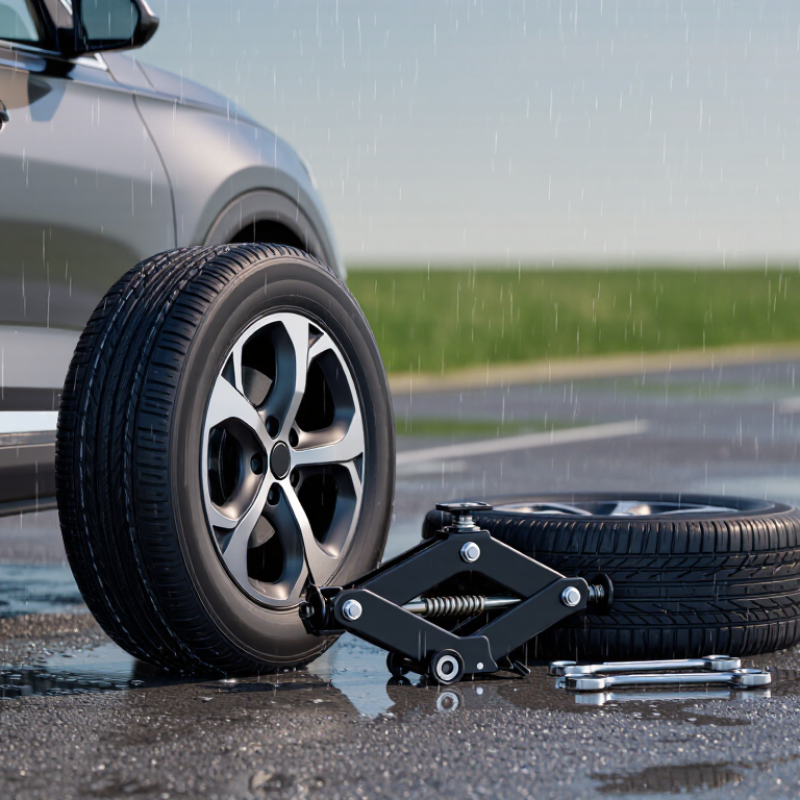
10 Spare Tire Tips for Global Buyers

Understanding Spare Tire Types and Global Market Requirements

Global buyers should treat a spare tire as a market-specific safety component, not a universal accessory. Common options include full-size tires, temporary “donut” tires, run-flat systems, and sealant kits with compressors. Each serves a different road environment. A full-size spare suits long-distance routes and rough roads, but increases vehicle weight and storage demand. Temporary spares save space, yet usually restrict speed and distance. In the United States, NHTSA safety guidance commonly limits temporary spares to 50 mph, or about 80 km/h.

Market requirements are becoming more complex. The International Energy Agency reported nearly 14 million electric cars sold globally in 2023. Their heavier battery systems can require careful checks of tire load ratings, wheel compatibility, and lifting points. Do not assume a conventional spare fits an electric vehicle. It may not. Buyers should verify bolt patterns, center bores, brake-clearance measurements, rolling circumference, and TPMS compatibility before shipment.

Regional road conditions also matter. ACEA’s Vehicles on European Roads report placed the average European passenger car age at about 12 years, suggesting replacement demand remains important across mature markets. In warmer regions, heat-resistant compounds and correct pressure labels deserve attention. In colder areas, winter-rated alternatives may be necessary. Packaging should protect the tire from sunlight, moisture, and deformation during storage. A practical inspection includes tread depth, sidewall markings, manufacturing date, valve condition, and inflation pressure. Even experienced buyers sometimes overlook the jack’s load capacity. That mistake can turn a compliant spare-tire package into an unsafe one.

Matching Spare Tire Size, Load Rating, and Vehicle Compatibility

10 Spare Tire Tips for Global Buyers

Matching Spare Tire Size, Load Rating, and Vehicle Compatibility

A spare tire must match more than the wheel diameter. Check the vehicle manual, door label, and original tire markings before ordering. Confirm the full size, width, construction type, bolt pattern, center bore, and offset. A 17-inch wheel can still fail to fit because its center bore or brake clearance differs. Measure the gap around the caliper, especially on vehicles with larger brakes.

Load rating matters. Choose a spare that can safely support the vehicle’s permitted axle load, not merely its empty weight. Speed markings also deserve attention. Temporary spares often have strict speed limits and shorter service distances. Follow those limits exactly. Check the recommended inflation pressure with a reliable gauge. Pressure loss is common during long storage.

Test fit the wheel before an emergency. Turn the steering fully and inspect suspension clearance. On four-wheel-drive vehicles, different tire diameters may stress the drivetrain. Ask a qualified technician when the manual gives unclear guidance. Tire-pressure monitoring sensors may also need compatible settings. I once treated a new spare as ready, but its pressure was far too low after months in storage. That mistake was avoidable.

Inspect the spare every few months. Look for cracks, corrosion, valve damage, and an unreadable date code. Store the jack, wrench, and locking key together. Regional road conditions can change the practical choice, too. Gravel routes may require stronger construction than smooth urban roads. Compatibility is never just a catalog match.

10 Spare Tire Tips for Global Buyers: Matching Size, Load Rating, and Vehicle Compatibility

Load index indicates the maximum load a tire can carry at its specified inflation pressure. The values shown are standardized examples: Load Index 95 supports 690 kg, while Load Index 115 supports 1,215 kg. Buyers should also verify tire diameter, width, rim diameter, bolt pattern, center bore, brake clearance, speed rating, and the vehicle manufacturer's compatibility requirements before selecting a spare tire.

Reference: Standard tire load-index values used in international tire specifications.

Checking Tire Age, Materials, and Manufacturing Standards

10 Spare Tire Tips for Global Buyers

A spare tire can look unused and still be unsafe. Check the four-digit date code on its sidewall. The first two digits show the production week, while the last two indicate the year. NHTSA recommends tire inspections after five years, while some manufacturers advise replacement between six and ten years. Age matters, even when tread depth looks generous. NHTSA also reports about 11,000 tire-related crashes annually in the United States, making basic inspection a serious purchasing step.

Materials deserve equal attention. Examine the rubber for cracking, hardening, or a dry, chalky surface. Steel belts should sit evenly, and textile cords should not appear through cuts or bulges. A tire built with natural rubber, synthetic rubber, carbon black, silica, steel, and textile reinforcement needs balanced construction. Cheap-looking materials are not always poor, and expensive materials are not automatically safer. That assumption needs questioning.

Manufacturing standards vary by destination. Check the required approval marking for the target market, then compare the tire with UNECE Regulations No. 30 or 54, where applicable. For the United States, verify compliance with FMVSS 109. Review load capacity, speed rating, inflation pressure, and storage conditions. A spare stored beside engine heat may age faster. Packaging can also mislead; “new” does not necessarily mean recently manufactured. Always request production records, conformity documents, and clear photographs of both sidewalls.

10 Spare Tire Tips for Global Buyers - Checking Tire Age, Materials, and Manufacturing Standards
No. Inspection Dimension What to Check Reliable Data or Acceptance Guidance Buyer Action
1 Manufacturing Date Read the four-digit date code molded into the tire sidewall. The first two digits identify the production week, and the last two digits identify the production year. For example, 2424 means the tire was manufactured in the 24th week of 2024. The code should be complete, legible, and consistent across the delivered tire set. Record the date code before shipment and compare it with the purchase specification.
2 Tire Age and Storage Check the elapsed time since production, together with warehouse conditions and storage history. Age limits vary by vehicle maker, tire type, and local regulation. Tires should be stored in a cool, dry, ventilated area away from sunlight, ozone sources, oils, and solvents. Set a maximum acceptable production age in the contract and request a first-in, first-out storage process.
3 Size and Load Markings Verify the full sidewall marking, including nominal width, aspect ratio, construction type, rim diameter, load index, and speed symbol. A marking such as 205/55 R16 91V indicates a 205 mm nominal width, 55% aspect ratio, radial construction, 16-inch rim diameter, load index 91, and speed symbol V. Match every marking with the vehicle, spare-wheel rim, owner’s manual, and destination-market requirements.
4 Tire Construction Confirm whether the tire is radial or bias-ply and inspect the carcass, bead, sidewall, tread, and inner liner for visible defects. Passenger-car tires are commonly radial. The bead should be uniform, the sidewall should be free from cuts or bulges, and the tread should not show exposed reinforcement or separation. Use visual inspection plus sampling inspections during incoming quality control.
5 Material Composition Review the declared materials used in the tread and structural components, such as natural rubber, synthetic rubber, carbon black, silica, steel cord, textile cord, and curing agents. Material proportions vary by tire design. Steel and textile reinforcement should be fully embedded, while the rubber compound should be uniform and free from contamination, cracking, or foreign particles. Request a material declaration, safety data documentation where applicable, and batch-level traceability.
6 Regulatory Markings Check markings required for the destination market and confirm that they correspond to valid regulatory approval or conformity documentation. Common regulatory frameworks include UN vehicle regulations, United States Federal Motor Vehicle Safety Standards, and national or regional conformity systems. Requirements differ by market and tire category. Identify the destination-country rule before purchasing and obtain the applicable approval documents from the manufacturer or supplier.
7 Quality Management Evaluate the production site’s quality controls, calibration system, nonconforming-product process, and batch traceability. A quality-management certificate based on ISO 9001 can indicate a structured management system, but it does not by itself prove that every tire meets performance or regulatory requirements. Audit the production process and review inspection records rather than relying only on certificates.
8 Performance Testing Ask for evidence of dimensional checks, inflation-pressure testing, endurance testing, high-speed testing where applicable, and uniformity inspection. Test methods and pass criteria depend on tire size, category, and destination market. Test reports should identify the tire specification, production batch, test equipment, date, and result. Use an independent laboratory for pre-shipment sampling when the order volume or market risk is significant.
9 Inflation and Safety Information Confirm the recommended inflation pressure, temporary-use restrictions, direction of rotation, maximum speed, and permitted distance for a temporary spare. Temporary spare tires may have lower speed and distance limits than full-size tires. The correct limits must come from the tire marking, vehicle documentation, or applicable regulatory information. Ensure that safety instructions are supplied in the required language or languages for the destination market.
10 Packaging and Final Inspection Inspect packaging protection, sidewall condition, valve compatibility, rim fit, tire pressure, quantity, and shipping documents. Tires should be protected from moisture, ultraviolet exposure, deformation, sharp edges, and contact with substances that can damage rubber. The delivered specifications must match the purchase order. Perform a documented final inspection, photograph date codes and markings, and retain batch, shipping, and conformity records.

Evaluating Storage, Packaging, and International Shipping Conditions

A spare tire can look simple, yet international shipping exposes weak storage and packaging decisions quickly. Inspect the tire, rim, valve, and markings before packing. Confirm its size and load rating against the buyer’s vehicle requirements. Record photos and measurements for traceability. Keep it dry.

Store tires away from sunlight, fuel, solvents, and ozone-producing equipment. A cool, ventilated warehouse helps prevent rubber aging. Keep tires upright when possible, and avoid long-term pressure from heavy stacking. For mounted tires, protect the rim with foam rings or molded corner guards. Use a clean pallet with no protruding nails. Wrap the tire firmly, but leave limited ventilation to reduce trapped condensation.

Packaging must survive forklifts, port handling, and container movement. Use strong cartons or a secured pallet cover, then add edge protection around metal surfaces. Place moisture-absorbing material inside sealed packaging when climate changes are expected. The packaging should not shift during a tilt test. It is worth checking this manually; computer estimates can miss a loose strap. Label the package with handling direction, quantity, dimensions, and net weight. Before dispatch, verify invoices, packing details, and destination requirements with the logistics provider. Avoid placing tires beside heat sources or chemicals inside the container. Inspect the container floor for water, odor, and damage before loading. One shipment taught me that a dry warehouse does not guarantee a dry container. Photos at loading, seal records, and arrival checks make claims easier to assess.

Comparing Suppliers, Certifications, Prices, and After-Sales Support

Buying spare tires globally involves more than finding the lowest quotation. Compare suppliers by manufacturing experience, production capacity, export records, and technical communication. Ask for tread specifications, load ratings, rubber compound details, and batch traceability. A reliable supplier should provide clear test reports and answer practical questions without avoiding difficult details. I once accepted a polished catalog too quickly; the delivery terms later revealed important gaps.

Tip 1: Check certifications carefully. Confirm that documents match the exact tire size, pattern, factory, and production date. Certification logos alone prove little. Request copies of relevant conformity documents, test results, and quality-management records. Verify issuing bodies through official channels where possible. Requirements differ by destination, so local import rules deserve direct review.

Tip 2: Compare the complete price, not only the unit cost. Include tooling, packaging, inspection, inland transport, ocean freight, insurance, duties, and payment fees. A cheaper tire may have older stock or weaker casing consistency. Request prices for several quantities and ask how pricing changes with seasonal rubber costs. Leave room for uncertainty; freight estimates can move quickly.

Tip 3: Test after-sales support before placing a large order. Ask about defect claims, response times, replacement procedures, and evidence requirements. Put these terms into the purchase agreement. Keep sample photos, inspection records, and shipment documents. Good support is measurable. Still, some buyers rely too heavily on promises and neglect independent pre-shipment inspection. That mistake can be expensive.

Article Source:

MSIRobot