How to Choose the Best Massage Table for Your Business?
Choosing the right Massage Table can shape how clients experience your business, from the first adjustment to the final stretch. A table that feels stable, fits your treatment style, and suits your room makes daily work easier. Small details matter. Think of a client lying face down while you reach across the table, or a therapist adjusting its height between appointments. These moments reveal whether a model works in practice.
The best choice depends on more than price or appearance. Consider the services you provide, how often the table will be used, and whether you need a stationary or portable design. Check the working weight capacity, width, height range, frame construction, and padding. Ask how the upholstery should be cleaned and whether replacement parts are available. Product specifications are useful, but they do not tell the whole story. If possible, test the table in person, or review clear measurements and warranty terms before buying.
Comfort is not one-size-fits-all. A wider surface may reassure some clients, while a narrower one can help a therapist reach comfortably. Portability can save space, but carrying a heavy table between locations may become tiring. There is a trade-off. Your budget matters too, yet the lowest price may not reflect long-term value. Compare realistic options against your workload and room layout, then note what you still cannot verify. That uncertainty deserves attention. This guide explores the practical features, materials, and buying considerations that can help you choose a Massage Table with confidence—without assuming one model suits every business.
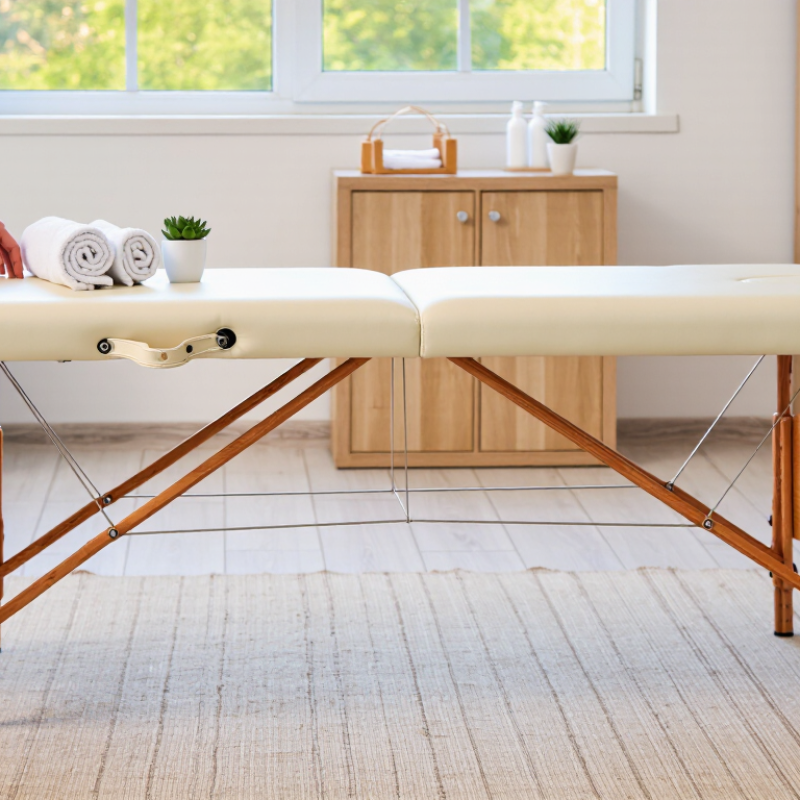
Assess Your Business Needs and Treatment Requirements
Before comparing massage tables, map the work you actually perform. The U.S. Bureau of Labor Statistics projects 18% employment growth for massage therapists from 2023 to 2033, much faster than average. That forecast suggests a growing profession, but your own service mix matters more than a national trend. A sports massage practice may need a wider, sturdier surface for broad techniques. A mobile therapist may value a lighter table that folds easily and fits in a vehicle. Test the setup in the space where you will use it.
List your treatments, session length, client needs, and room constraints. For facial or relaxation work, adjustable headrests and bolsters can improve positioning. For deep-tissue sessions, check the table’s stated working weight limit and stability; a wobbling frame disrupts careful pressure. Measure doorways, storage corners, and the gap around the table. Small details matter. Upholstery should tolerate frequent cleaning without becoming slick or cracked. If several therapists share a room, quick height adjustment can reduce awkward reaching, though staff may still forget to reset it. That happens. Compare specifications with hands-on trials, and ask practitioners to test the table using their usual techniques before buying.
How to Choose the Best Massage Table for Your Business?
Assess Your Business Needs and Treatment Requirements
Priorities vary by service. Mobile therapists may value portability most, while busy clinics may focus on durability and weight capacity. These illustrative scores are planning guidelines, not measured industry survey results.
Compare Massage Table Types and Configurations
A fixed-height table is sturdy and often costs less, but it may not suit therapists who work in several rooms. A portable model folds for transport; check its folded weight, handle, and setup time before buying. For a busy studio, an electric table can adjust height with a foot control, reducing repeated lifting. It also needs floor space and a nearby power outlet. Small details matter.
Compare the working surface, not just the frame. A wider top can help clients feel secure, while a narrower top may let the therapist reach across more easily. Face-cradle adjustment, arm supports, and split-leg sections can improve positioning for different treatments. Yet every accessory adds setup steps. That trade-off is easy to overlook.
The U.S. Bureau of Labor Statistics projects massage therapist employment to grow 18% from 2023 to 2033, much faster than average. Its Occupational Outlook Handbook also estimates about 24,700 openings each year. These figures suggest planning for sustained client demand, but they do not specify which table type sells best. Match the configuration to your actual appointments: mobile visits favor lighter folding tables, while frequent height changes may justify an electric model. Test the table with a therapist’s working posture, not only an empty room. I would not assume one table suits every service.
Evaluate Comfort, Adjustability, and Essential Features
Choosing a massage table means balancing client comfort with the therapist’s daily workload. The American Massage Therapy Association’s 2024 Massage Profession Research Report found that 47% of surveyed consumers had received a massage in the previous year. That figure makes a comfortable, dependable setup worth careful evaluation, though it cannot predict demand for any single business.
Test the table at the height you use most. Your shoulders should stay relaxed while your hands reach the client’s back; a few inches can change how your wrists feel after several sessions. Check the adjustment range, locking mechanism, and whether the table stays steady when pressure shifts. Ask someone to lie face down and notice whether the face cradle holds comfortably without forcing the neck upward. Small details matter. Padding should feel supportive, not simply soft, and the surface should be easy to clean between appointments. Review the manufacturer’s stated weight capacity and distinguish working load from static load. One detail I have learned to reassess is portability: a lighter table saves effort, but it may feel less stable. There is no perfect trade-off. Walk around the table, fold it, and try the controls before buying.
Check Durability, Safety, and Maintenance Requirements
How to Choose the Best Massage Table for Your Business?
Check Durability, Safety, and Maintenance Requirements
A massage table must handle repeated adjustments, daily cleaning, and clients of different sizes. Check the frame joints, hinges, and cables for solid construction. Open and close the table several times; movement should feel steady, without wobbling or sharp creaks. Confirm that its working weight capacity suits your clients and includes the pressure applied during treatments. A high capacity number alone does not prove stability. Ask for clear care instructions and inspect the upholstery for seams that are easy to wipe without trapping residue.
Tips: Test the table on a level floor, then adjust its height and lean gently against each edge. Check that the locking mechanisms engage fully and remain secure. For a portable model, carry it folded before buying; a table that is difficult to lift may be awkward between appointments. Keep a simple maintenance log, and check fasteners, cables, and moving parts regularly. Clean surfaces with products approved for the upholstery, since harsh cleaners may cause cracking or discoloration. Small wear can be easy to overlook. That is worth reflecting on.
Maintenance needs vary with usage, room conditions, and construction. Follow the manufacturer’s inspection schedule, and remove a table from service if its frame shifts or a lock slips. No table stays perfect forever. Choose one with accessible replacement parts and practical service support, so minor wear does not become a safety concern.
Set a Budget and Select the Best-Fit Table
Set a realistic budget before comparing massage tables. Include more than the purchase price: delivery, replacement face-cradle covers, cleaning supplies, and possible repairs all affect long-term cost. A low-priced table may suit a new practice, but check its weight rating, warranty, and return terms carefully. A table that wobbles during a shoulder treatment is no bargain.
Match the table to your daily work. Measure the treatment room, doorway, and storage space, then note how often you will move the table. A mobile therapist may value a lighter folding model; a busy clinic may prefer a heavier table that stays put. Check its working height range against your posture. If you lean forward all day, even a small height mismatch can make sessions tiring. Details matter.
Comfort needs a hands-on check. Press the padding, test the face cradle, and see whether the upholstery feels easy to wipe clean. Ask a colleague to lie on the table and shift position. Does it creak? Does the surface feel firm enough for your techniques? Specs help, but they do not tell the whole story. I would not choose based on appearance alone; that has led to second thoughts before. Keep a little budget aside for practical accessories, and avoid paying for features you are unlikely to use.
How to Choose the Best Massage Table for Your Business? — Set a Budget and Select the Best-Fit Table
Compare common table types, indicative U.S. price ranges, portability, and practical features to find an option suited to your services and setup.
Buying tip: Price and capacity figures are general estimates, not guarantees. Before purchasing, confirm the exact dimensions, working-weight rating, table weight, warranty, return policy, and included accessories for the specific model.
