How to Choose the Right Disposable Syringe for Your Needs?
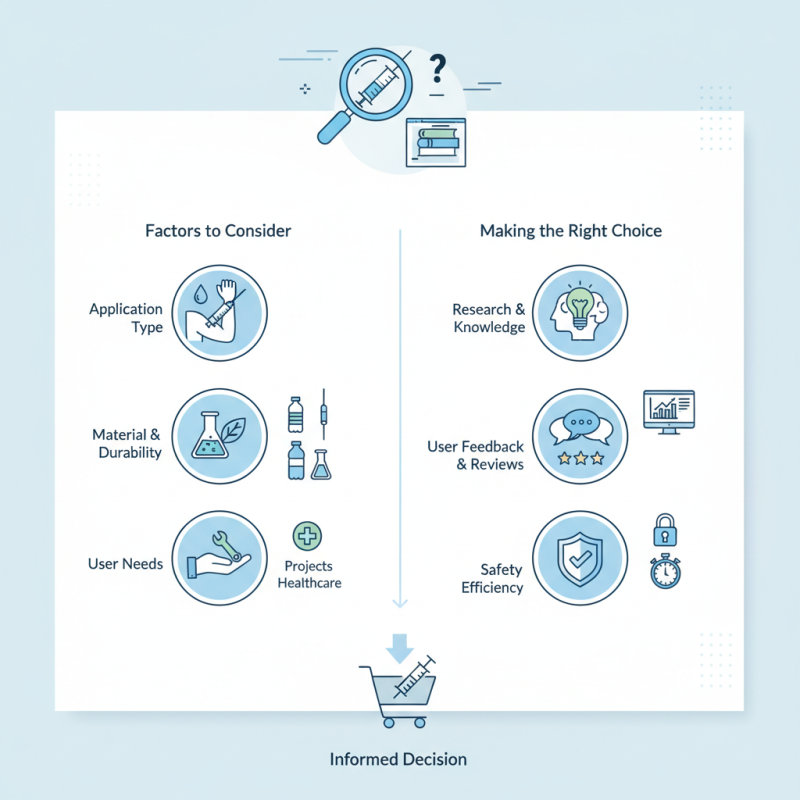
Choosing the right Disposable Syringe is crucial for various applications. Whether you’re in a healthcare setting or engaging in at-home projects, the right choice ensures efficiency and safety. Disposable syringes come in various sizes and types. Each design offers unique features suited for different tasks.
Understanding your specific needs is essential. Some syringes have basic designs, while others feature specialized tips for precise applications. For instance, insulin syringes have a finer gauge. This is vital for accurate dosing. Additionally, consider the material used in the syringe's construction. Some users might prefer plastic due to its lightweight nature, while others may favor glass for its durability.
In the growing market of disposable syringes, guidance is critical. Not all syringes are created equal. With a multitude of options, you may feel overwhelmed. Yet, reflecting on your requirements can help narrow down the choices. Researching brands and reading user feedback can significantly aid in making an informed decision. Ultimately, the right disposable syringe can enhance your experience and ensure safety in your applications.
Understanding Different Types of Disposable Syringes Available in the Market
When selecting a disposable syringe, it’s essential to understand the different types available. These syringes vary in size, needle gauge, and purpose. For instance, a 1ml syringe is commonly used for insulin, while larger syringes can accommodate larger volumes. It's vital to choose a syringe that matches your specific needs.
The needle gauge is also crucial. Thinner needles, indicated by a higher gauge number, cause less pain during injections. Conversely, thicker needles are better for delivering viscous substances. Consider the material of the syringe too. Many are made from polypropylene, which is safe and effective. Some people may prefer syringes with a latex-free option due to potential allergies.
Reflecting on personal experiences with different syringes may help you identify what works best for you. Did you find a particular type more comfortable? Did a size make a difference? These reflections will guide future choices. Not every syringe is suitable for every person. Understanding these choices can enhance safety and comfort.
Different Types of Disposable Syringes
Evaluating the Purpose of Use: Medical vs. Non-Medical Applications
When choosing a disposable syringe, it's essential to evaluate the intended application. Medical and non-medical uses differ significantly. According to industry reports, the global disposable syringe market is projected to reach $9.6 billion by 2025, reflecting a growing demand driven largely by healthcare needs.
In medical settings, syringes are critical for safe dosing and administration of medications. For this purpose, they must adhere to strict regulatory standards. Quality assurance is vital. You need to check if syringes meet ISO 13485 certification, which ensures that medical devices are consistently produced and controlled. Non-medical applications, such as art or industrial uses, often require syringes of varied sizes and specifications. They may not need the same level of sterilization, but choosing the right size is still important.
Consider the volume you need. Standard volumes include 1 mL, 3 mL, and 5 mL. Different applications might require different volumes. A small mistake in measurement can lead to significant errors. Reflect on the safety features too. Needles with retractable designs prevent accidental needle sticks.
Analyze your specific use case to determine which features are truly essential. Balancing quality with cost is important, yet often overlooked. This decision can impact both effectiveness and safety in the long run.
Key Features to Consider When Selecting a Disposable Syringe
Choosing the right disposable syringe can significantly affect both safety and efficiency. There are several key features to consider. The gauge size is vital; it determines the needle's thickness. A thinner needle reduces discomfort, while a thicker needle allows for faster medication delivery. Reports suggest that a 23-gauge needle is commonly used for subcutaneous injections, striking a good balance between comfort and efficacy.
Another important factor is the syringe volume. Most medical professionals prefer syringes ranging from 1 mL to 60 mL, depending on the application. Larger volumes are typically beneficial for procedures requiring higher doses, like administering certain vaccines. Data indicates that a substantial percentage of healthcare providers use 3 mL syringes for general purposes, as they provide a practical option for various injections.
Safety features also warrant attention. Many syringes now come with safety locks to prevent needle stick injuries. A survey showed that over 50% of healthcare workers reported a preference for these safety-enhanced designs. While they may be slightly more expensive, the long-term reduction in injury risk makes them worth considering. However, not all safety features are equally effective, requiring careful evaluation.
How to Choose the Right Disposable Syringe for Your Needs? - Key Features to Consider When Selecting a Disposable Syringe
| Feature | Description | Importance |
| Volume | Syringe volume ranges from 1ml to 60ml or more, depending on the purpose. | Choosing the right volume is crucial for accurate dosing. |
| Needle Size | Needle gauges vary, impacting the flow rate and comfort of injection. | Select a gauge that suits the fluid viscosity and patient comfort. |
| Sterility | Most disposable syringes are sterilized and packaged for single use. | Ensure the syringe is sterile to prevent infections. |
| Barrel Material | Syringes can be made from plastic or glass. | Plastic is commonly used for single use, while glass is more durable. |
| Luer Lock vs. Luer Slip | Luer lock syringes provide a secure connection, while luer slip are easier to attach. | Choose based on the type of procedure and safety requirements. |
| Graduations | Marked measurements on the barrel for accurate dosing. | Essential for precision in injections and withdrawals. |
| Piston Design | The design affects the ease of plunger action and fluid delivery. | A smooth piston ensures better control during administration. |
Assessing the Size and Volume Requirements for Your Needs
Choosing the right disposable syringe involves understanding your specific size and volume needs. Syringes come in various sizes, ranging from 0.5 mL to 60 mL. The intended use will guide your selection. For small doses, such as pediatric medication, a 1 mL or 3 mL syringe is ideal. In contrast, for larger volumes, like vaccinations or fluid transfers, consider syringes of 10 mL or more.
Pay attention to the markings on the syringe. Clear graduation markings allow for precise measurements. If a syringe isn't labeled accurately, it can lead to dosing errors. Also, consider the gauge of the needle. A lower gauge indicates a thicker needle, suitable for viscous liquids. Assessing your requirements beforehand can prevent these common pitfalls.
Stay aware of your comfort when selecting the syringe type. Sometimes people feel uneasy about larger needles yet need them for certain applications. Reflecting on your past experiences with needles can help. It’s crucial to balance comfort and functionality. Think through what you really need.
Ensuring Safety and Compliance: Quality Standards in Syringe Selection
When selecting a disposable syringe, safety and compliance are paramount. Quality standards play a crucial role in ensuring that syringes are safe for use. The World Health Organization states that improperly used syringes can increase the risk of infections and disease transmission. It’s essential to choose syringes that meet international safety guidelines.
Many sectors utilize disposable syringes. Healthcare professionals require them for accurate dosing. A 2022 report from the International Medical Device Regulators Forum highlights that unregulated syringes can lead to significant health risks. They've noted an alarming rise in needle-stick injuries due to poor-quality syringes. Selecting syringes that comply with established quality standards can minimize these risks.
Materials used in syringe production also matter. Some syringes use cheaper plastics that may not guarantee safety. This raises questions about reliability. The FDA emphasizes the importance of using devices that meet ASTM standards. Failing to do so puts patients at risk. Evaluating the manufacturing processes can ensure higher safety. Reliable suppliers should be transparent about their sourcing and testing protocols.
