Choosing a prototype circuit board manufacturer can shape your product’s performance, schedule, and development costs. The right partner does more than produce boards. They help identify design risks before expensive testing begins. Their engineers should understand stack-up planning, impedance control, component sourcing, and assembly tolerances. Ask for evidence, not broad promises. Review sample boards, inspection reports, certifications, and customer references where available.
Small details often reveal manufacturing discipline. A reliable supplier can explain its minimum trace width, drill tolerance, surface finish, and quality inspection process. They should also clarify how engineering changes affect pricing and delivery dates. During evaluation, request a sample quotation using your actual Gerber files. Compare the response time, technical questions, and proposed production method. This practical step may reveal more than a polished website.
Experience matters.
A manufacturer familiar with early-stage products may suggest design-for-manufacturing improvements without taking control of your project. Look for clear communication, documented quality procedures, and realistic delivery estimates. Ask how they handle failed tests, material substitutions, and urgent revisions. These questions are uncomfortable, but they protect your schedule. No checklist is perfect. A supplier with impressive equipment may still communicate poorly or overlook small design issues. Likewise, a smaller factory may provide stronger engineering support than a larger competitor. The best choice depends on your board’s complexity, volume, compliance needs, and development timeline. Careful comparison creates a more dependable path from prototype to production.
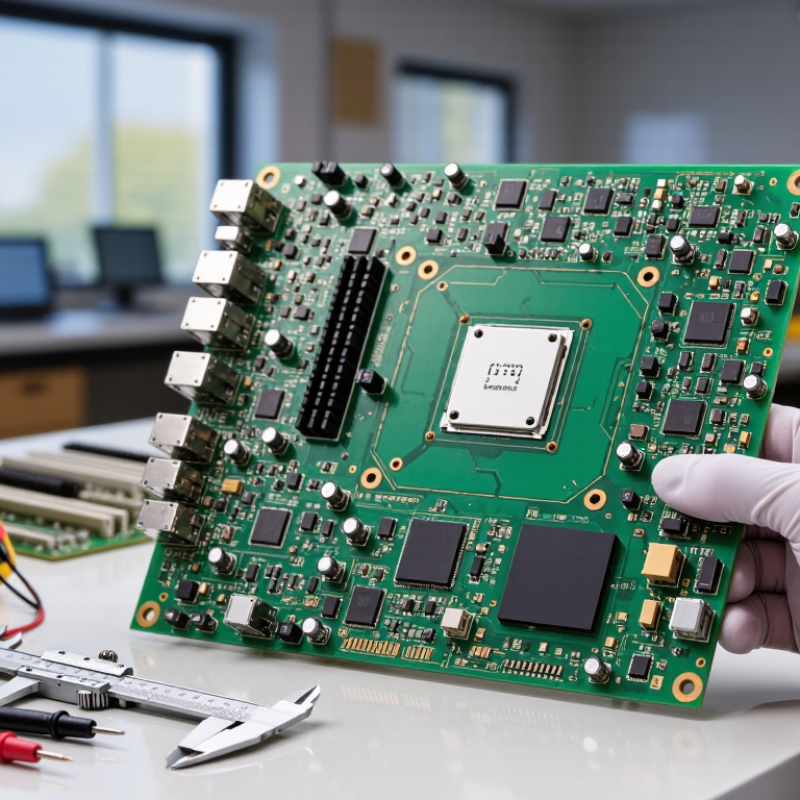
A reliable manufacturer needs clear requirements before reviewing your prototype request. Describe the board’s purpose, operating environment, and expected electrical performance. State the board length, width, thickness, layer count, and material. Include copper weight, surface finish, and controlled impedance needs. Small details matter.
Provide complete design files, including Gerber data, drill files, and a bill of materials. Add assembly drawings with component locations and polarity marks. Mention unusual parts, fine-pitch packages, and restricted installation areas. If the board uses high-speed signals, specify impedance values and routing limits. Power requirements should include voltage, current, and connector details.
Testing requirements also need definition. Ask for visual inspection, electrical testing, or functional testing when necessary. State the prototype quantity, delivery target, and acceptable manufacturing tolerances. These details help manufacturers assess capability instead of guessing. A well-prepared requirement sheet saves time.
Still, no document is perfect. Early designs often change after the first powered test. Leave room for engineering feedback and controlled revisions. I have seen small omissions, such as an unlisted connector height, cause avoidable assembly delays. Share your priorities honestly, especially when cost, speed, and reliability conflict. A capable manufacturer should question unclear specifications and explain practical limitations. That conversation is part of the selection process.
When choosing a prototype circuit board manufacturer, inspect capabilities before comparing prices. Grand View Research valued the global PCB market at approximately USD 89.7 billion in 2023. The market’s projected growth increases pressure on factories, engineers, and inspection teams.
Ask for measurable limits: minimum trace and spacing, layer count, controlled impedance, via types, copper weight, and material options. Request recent cross-section images, not only polished product photos. A capable factory should explain stack-up design, thermal management, drill accuracy, and design-for-manufacturing risks in plain language. It should also support AOI, flying-probe testing, electrical testing, and X-ray inspection when necessary. IPC’s 2024 Electronics Industry Survey identifies skilled labor shortages and supply-chain pressure as continuing industry concerns. That makes engineering depth especially important for short prototype schedules.
Check whether the manufacturer follows relevant IPC acceptance criteria and maintains documented process control. Ask how it records lot numbers, material certificates, test results, and engineering changes. A reliable technical team will flag an unsuitable via diameter or an overcrowded copper area before fabrication. That saves more than a low quotation.
Do not accept vague claims.
I would also review first-article data, defect rates, and corrective-action reports. Yield figures can be selectively presented, so ask how they were calculated. My judgment could still be wrong if the sample is unusually simple. A small trial order reveals more than a confident sales presentation.
| Evaluation Dimension | What to Verify | Recommended Benchmark for a Capable Prototype Manufacturer | Evidence to Request | Importance |
|---|---|---|---|---|
| PCB Technology Coverage | Whether the manufacturer supports the board structures and materials required by the design. | Supports standard 2–8 layer rigid boards and can provide controlled-impedance, high-frequency, HDI, rigid-flex, or flex capability when required. | Technology capability matrix, sample builds, and documented design rules. | High |
| Layer Count and Board Size | Maximum layer count, finished board dimensions, thickness range, and aspect-ratio limitations. | Clear published limits for layer count, board size, finished thickness, minimum hole size, and aspect ratio. | Current fabrication specification and engineering review checklist. | High |
| Minimum Trace and Space | Smallest manufacturable copper trace and spacing for the selected material and copper weight. | Capability is stated in measurable values, such as 0.10–0.15 mm trace/space for suitable prototype designs, with tighter values subject to engineering review. | Design-for-manufacturing rules and a sample impedance or fine-line report. | High |
| Drilling and Via Capability | Mechanical drilling, laser drilling, microvias, via-in-pad, buried vias, and back-drilling support. | Uses documented drill tolerances and confirms whether small holes are mechanically drilled or laser drilled. | Drill table, via process flow, and cross-section examples. | High |
| Material Selection | Availability and traceability of FR-4, high-Tg, halogen-free, low-loss, polyimide, aluminum-core, or other materials. | Provides material datasheets, dielectric information, thermal ratings, and lot-level traceability. | Material certificates, datasheets, and approved-material list. | High |
| Controlled Impedance | Ability to calculate, fabricate, and test impedance-controlled traces for high-speed or RF designs. | Uses stack-up-based impedance calculations and verifies selected traces with test coupons or an equivalent documented method. | Proposed stack-up, impedance report, coupon design, and test results. | High |
| Copper and Surface Finish | Inner and outer copper weights, plating thickness, solderability, and surface-finish compatibility. | Clearly specifies copper thickness and supports common finishes such as lead-free HASL, ENIG, immersion silver, or OSP where appropriate. | Finished-board specification, plating-thickness records, and finish samples. | Medium |
| Dimensional Tolerances | Board outline, hole position, slot, cutout, thickness, and registration tolerances. | Provides tolerances before quotation and identifies features that require special tooling or engineering approval. | Mechanical capability sheet and first-article dimensional report. | High |
| Assembly Capability | SMT, through-hole, mixed technology, fine-pitch, bottom-termination, and selective soldering capabilities. | Supports the package types used in the design and has inspection controls for component placement and solder quality. | Equipment list, package capability table, and sample inspection images. | High |
| Component Sourcing | Ability to source authorized, traceable, and prototype-quantity components without compromising authenticity. | Uses approved sourcing channels, records manufacturer part numbers, and discloses substitutions before assembly. | Bill-of-materials review, sourcing policy, and component traceability records. | High |
| Inspection and Testing | Coverage of AOI, automated electrical testing, flying-probe testing, X-ray inspection, and visual inspection. | Inspection is matched to design risk; X-ray is available for hidden joints such as bottom-terminated or array packages. | Inspection plan, test coverage summary, and sample quality report. | High |
| Electrical Test | Whether every required net can be checked and whether test limitations are identified before production. | Provides flying-probe or fixture-based testing and reports opens, shorts, isolation, and continuity results. | Electrical-test procedure, netlist requirements, and test report format. | High |
| Engineering Review | Quality of DFM, DFA, stack-up, thermal, and manufacturability feedback before fabrication. | Reviews Gerber or ODB++ data, drill files, stack-up, drawings, and bill of materials before releasing the job. | Redacted engineering feedback, review checklist, and escalation process. | High |
| Prototype Lead Time | Time required for engineering review, fabrication, assembly, inspection, and shipping. | Provides a written schedule with separate milestones; simple prototype PCBs may be completed in several working days, while complex builds require longer. | Formal quotation, production schedule, and delay-notification procedure. | Medium |
| Revision Control | How the manufacturer controls updated Gerber files, drawings, bills of materials, and assembly instructions. | Uses revision identifiers, approval records, controlled file transfer, and a documented change-confirmation process. | Sample traveler, revision log, and customer-approval workflow. | High |
| Quality Management | Formal processes for nonconforming material, corrective action, calibration, and process monitoring. | Maintains a documented quality system and can provide relevant certification or audit evidence when required. | Quality manual, certificate scope, corrective-action example, and calibration records. | High |
| Reliability and Compliance | Compliance with applicable material, safety, environmental, and product-reliability requirements. | Can support requirements such as RoHS, REACH, flammability classification, thermal cycling, solderability, or internal reliability testing according to the project. | Compliance declarations, test reports, and material documentation. | Medium |
| Communication and Technical Support | Responsiveness and technical competence of the assigned engineering contact. | Provides prompt answers with measurable recommendations, identifies risks early, and communicates in the project language. | Defined contact structure, response-time commitment, and technical-question workflow. | Medium |
| Prototype-to-Production Continuity | Whether the same supplier can scale the validated design without changing critical materials or processes unexpectedly. | Offers documented pilot-to-volume transfer, process qualification, and change-notification controls. | Scale-up plan, process-capacity statement, and engineering-change policy. | High |
| Total Cost Transparency | Full cost of fabrication, tooling, testing, components, assembly, shipping, and engineering changes. | Quotation separates one-time tooling and setup charges from recurring unit costs and states exclusions clearly. | Itemized quotation, payment terms, validity period, and change-order policy. | Medium |
Choosing a prototype circuit board manufacturer requires more than comparing prices. In early hardware projects, material selection often decides whether testing reflects reality. Ask whether the supplier uses FR-4, high-frequency laminates, aluminum substrates, or flexible materials. Each option affects heat, signal loss, stiffness, and cost. A manufacturer should explain dielectric properties, copper thickness, surface finish, and stack-up limits clearly. Vague answers are a warning sign. Small details matter.
Review the manufacturing process before sending production files. Check design-rule verification, impedance control, drilling accuracy, solder mask registration, and trace spacing. Ask how engineers handle revised files and technical questions. Clear revision control prevents expensive confusion. Quality systems aligned with recognized standards can show discipline, but certificates alone prove little. Request inspection records, defect criteria, and sample traceability. I have learned that a polished report cannot replace consistent workmanship.
Testing should match the board’s real operating conditions. Electrical testing can identify opens and shorts, while optical inspection checks solder and surface patterns. For demanding designs, request impedance tests, microsection analysis, thermal cycling, or insulation resistance testing. Confirm test limits before fabrication. Otherwise, a “pass” may mean very little. Ask for photographs of test coupons and actual boards. I sometimes prefer a slower supplier with transparent evidence. It is not always the cheapest path. Still, prototypes change often, and my specifications are not always complete. A reliable manufacturer should challenge unclear assumptions and document every deviation.
How to Choose a Prototype Circuit Board Manufacturer?
Assess Lead Times, Communication, Pricing, and Order Flexibility
Choosing a prototype circuit board manufacturer requires more than comparing quoted prices. In prototype work, I have learned that lead time starts after file approval, not the first inquiry. Ask for a dated schedule covering engineering review, fabrication, assembly, inspection, and shipping. Request the cutoff time for design changes. Delays often begin there. A supplier that reports risks early is more useful than one offering a vague delivery promise.
Communication should be tested before payment. Send a controlled question about stack-up materials, impedance requirements, or inspection records. Notice whether the reply answers every point clearly. Good technical communication includes named contacts, response windows, and written change records. One mistake I made was treating quick replies as proof of competence. They were friendly, but several details remained unanswered. Keep it visible.
Pricing deserves a line-by-line review. Separate tooling, setup, testing, freight, and possible remake charges. Compare ten boards with fifty boards, because unit prices can hide minimum-order costs. Ask whether the manufacturer supports split deliveries, small revisions, and mixed quantities. Flexible ordering reduces unused inventory during testing. Still, flexibility may increase handling fees. I prefer those fees stated plainly before production. Request a sample invoice and confirm cancellation or hold conditions in writing.
Assess lead times, communication, pricing, and order flexibility before placing a prototype order.
Compare quoted working days for your layer count, surface finish, and inspection requirements.
Confirm that engineering questions, DFM feedback, and order updates receive a response within one business day.
Request an itemized quotation covering tooling, testing, shipping, setup fees, and revisions.
Check minimum order quantities, panelization options, design changes, and partial reorders.
Planning benchmark only: typical prototype lead-time ranges in working days. Actual timing varies by board complexity, materials, testing, and shipping.
A reliable manufacturer should prove its capabilities through physical samples and honest customer feedback. Request a board similar to your design, not a generic display piece. Inspect edge cuts, plated holes, solder mask alignment, and surface cleanliness under bright light. Measure critical dimensions with calipers. Small errors can affect assembly.
Ask for production records, inspection standards, and delivery history. A capable supplier should explain how it controls impedance, material quality, and dimensional tolerance. Contact recent customers when possible. Ask whether the boards arrived on time, matched the drawings, and performed consistently. Reviews alone can mislead. Verify dates, project types, and specific results.
I once trusted polished photos too quickly. The first batch looked excellent, but documentation was incomplete.
Send identical files to several suppliers and compare their questions. Careful questions often reveal practical experience. Request a small sample run before placing a larger order. Test solderability, hole quality, and electrical continuity. Record defects with photographs and written notes. Ask how the supplier handled previous failures. A defensive answer is a warning sign. Still, no supplier is perfect. Even a dependable partner may miss a detail. Leave room for inspection time, rework, and realistic delivery delays. Feedback becomes more useful when it includes evidence, not praise alone.
MSIRobot