10 Best Water Treatment Equipment Suppliers Worldwide
Choosing reliable suppliers for Water Treatment Equipment requires more than comparing product catalogs or advertised prices. Industrial plants, municipalities, hotels, and remote facilities face different water conditions, operating pressures, and maintenance challenges. A supplier experienced with high turbidity, salinity, heavy metals, or microbial contamination can recommend a more suitable treatment train. Small details matter, including membrane cleaning schedules, pump efficiency, control-panel access, and replacement-part availability.
This guide examines ten leading suppliers worldwide through practical and professional criteria. These include engineering capability, treatment performance, manufacturing quality, technical support, documented testing, and long-term service coverage. Certifications and compliance records also deserve careful review, although labels alone do not guarantee reliable field performance. Site assessments, pilot testing, and transparent operating data provide stronger evidence. They reveal how systems perform when water quality changes after rainfall or seasonal demand increases.
No ranking is perfect. Supplier strengths can vary by region, project size, and application. A company serving a large municipal plant may not suit a small food-processing facility. Some providers also communicate clearly, while others leave important maintenance costs unclear. That gap deserves attention. The featured companies represent credible options, not automatic choices. Buyers should verify references, warranty terms, energy consumption, delivery timelines, and local service capacity before making a final decision. The right partner should deliver safe treatment, measurable results, and dependable support throughout the equipment’s working life.
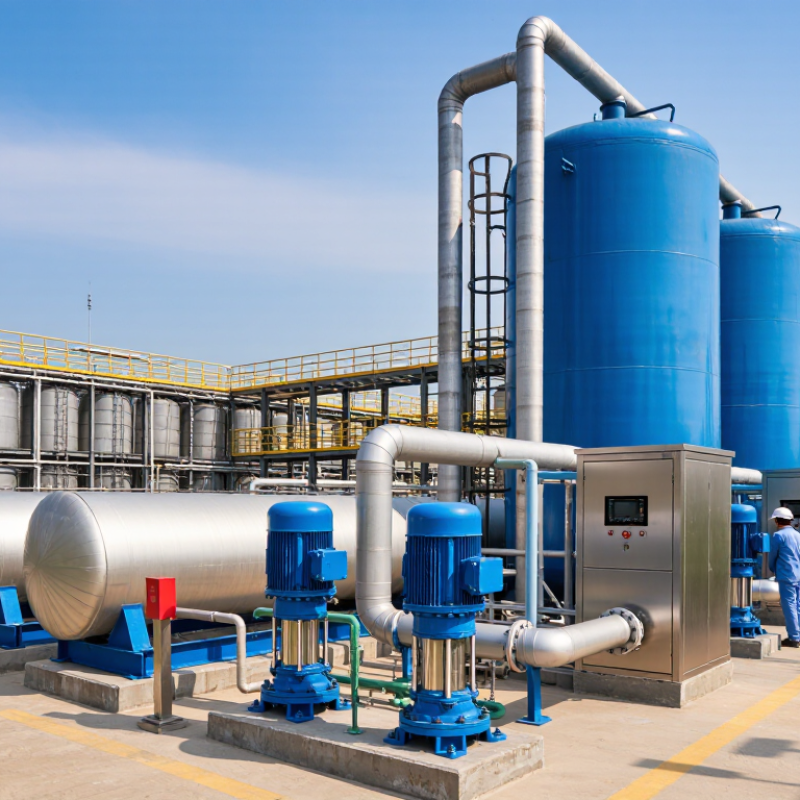
Global Water Treatment Demand: 2.2 Billion People Lacked Safe Water in 2022
Global water treatment demand is growing because 2.2 billion people lacked safely managed drinking water in 2022. This figure, reported by international monitoring agencies, reflects more than infrastructure gaps. It also shows the need for dependable treatment equipment, trained operators, and long-term maintenance. Suppliers worldwide now provide filtration, disinfection, membrane, and wastewater systems for cities, factories, hospitals, and remote communities.
Choosing equipment requires practical evidence. A suitable system should match the source water, daily flow, seasonal changes, and local power supply. For example, muddy river water may need screening and coagulation before membrane treatment. Operators should also check replacement costs, spare-part availability, sensor accuracy, and service response times. No supplier is perfect. A polished brochure can hide difficult maintenance conditions. Field records and independent test results matter more than impressive claims.
Tips: Ask suppliers for pilot-test data using your own water sample. Confirm treated-water results through qualified laboratories. Review training plans, emergency support, and waste-handling procedures before signing a contract. Small details matter, such as whether filters can be changed safely without specialized tools. Buyers should also question energy use and chemical storage needs. These checks may slow purchasing, but they can prevent expensive failures and unsafe water later.
Supplier Evaluation Criteria: Capacity, Efficiency, ISO Standards, and Service
10 Best Water Treatment Equipment Suppliers Worldwide
A credible supplier should match equipment capacity to real operating conditions, not only the advertised maximum. Ask for continuous flow, peak flow, inlet quality, temperature, and seasonal changes. A system rated at 1,000 cubic meters per day may perform poorly during sudden contamination spikes. Request verified performance data from comparable installations.
Efficiency deserves a closer review. Compare energy use per cubic meter, water recovery, chemical consumption, membrane life, and maintenance intervals. Numbers need context. A low-power unit may require more frequent cleaning or replacement parts. Suppliers should explain testing methods and provide clear assumptions. Factory acceptance testing and site acceptance testing can confirm flow, pressure, and treated-water quality before handover.
ISO certification can support confidence, but it is not proof of perfect equipment. Check the certificate scope, issuing body, validity, and connection to manufacturing or service activities. ISO 9001 may indicate controlled quality processes, while environmental standards can show broader management discipline. Service capability is equally practical. Evaluate response times, spare-parts availability, remote monitoring, commissioning support, operator training, and local technicians. Ask for recent customer references and documented failure responses. A supplier may present excellent specifications yet struggle after installation. That risk is easy to overlook. My own evaluation would include a site visit when possible, although budget and distance sometimes make this unrealistic.
Top 10 Global Suppliers by Technology, Scale, and Regional Coverage
The world’s water-treatment market is expanding under severe pressure. The WHO/UNICEF Joint Monitoring Programme reported that 2.2 billion people lacked safely managed drinking water in 2022. This demand favors suppliers with proven treatment technologies, not impressive brochures.
A serious top-ten global shortlist should compare membrane filtration, desalination, biological treatment, disinfection, and industrial wastewater recovery. Scale matters, but installed capacity alone can mislead. The World Bank reports that water reuse can strengthen urban resilience, especially where freshwater supplies face climate stress. Regional coverage also deserves close attention. A supplier serving coastal cities may lack suitable support for inland factories or remote municipalities. Local technicians matter. Spare parts matter more.
Evaluation should include operating references, energy intensity, pilot-test results, and documented compliance practices. The International Energy Agency has highlighted desalination’s energy burden, making power consumption a practical purchasing concern. The best suppliers usually provide lifecycle monitoring, operator training, and process adjustments after commissioning. Yet performance claims are not always comparable. Some reports use different capacity definitions. That weakness deserves scrutiny.
Technology depth should be matched with regional execution. Suppliers with facilities across several continents can shorten response times and understand local water chemistry. However, global reach does not guarantee reliable service. Buyers should inspect five-year maintenance records, membrane replacement schedules, and emergency response procedures before ranking the final ten. Evidence beats reputation.
Core Technologies: RO, UF, MBR, UV, and 120+ Million m³/Day Desalination
The best water treatment equipment suppliers now compete through process depth, not impressive catalogues. Reverse osmosis removes dissolved salts, while ultrafiltration targets suspended solids and microorganisms. MBR systems combine biological treatment with membrane separation for compact wastewater plants. UV adds final disinfection without chemical residuals.
Global demand is measurable. Global Water Intelligence’s DesalData reports worldwide desalination capacity above 120 million m³ per day. The 2024 UN World Water Development Report also highlights rising water stress and stronger investment in reuse. These figures make supplier evaluation more technical. Buyers should inspect recovery rates, energy consumption, membrane flux, cleaning intervals, and verified pilot results. A low purchase price may hide higher lifetime costs. That mistake is common.
Tips: Request site references with similar feedwater. Ask for independently tested water-quality results. Confirm compliance with WHO guidance and applicable local standards. Check whether the supplier provides operator training, spare parts, and remote diagnostics. RO may deliver excellent salinity control, but pretreatment failures can damage membranes quickly. UV can underperform when turbidity rises. MBR can reduce footprint, yet biological stability requires skilled operation. I would not trust a performance promise without raw-water analysis, seasonal testing, and a clear warranty. Even strong designs need revision after real commissioning data.
Global Desalination Technology Mix
Approximate share of installed global desalination capacity by core technology, based on international industry capacity data.
Reverse osmosis represents the largest share of global desalination capacity, while thermal processes such as multi-stage flash and multiple-effect distillation remain important in large-scale facilities. Other membrane and electrochemical technologies account for a smaller portion of installed capacity. Figures are approximate and refer to installed capacity share rather than annual production.
Source: International Desalination Association and Global Water Intelligence industry capacity summaries, 2018.
Industry Comparison: 70% Agricultural Withdrawals, Costs, and Water-Reuse Rates
10 Best Water Treatment Equipment Suppliers Worldwide
Agriculture takes nearly 70% of global freshwater withdrawals, according to FAO AQUASTAT and the UNESCO World Water Development Report. This figure changes the supplier conversation. A reliable system must reduce intake, not only improve outlet quality. Filtration, biological treatment, membrane separation, and disinfection should match the crop, soil, and local water chemistry. A greenhouse may need nutrient recovery, while a food-processing site may need grease removal first.
Cost comparisons are difficult. Published benchmarks from the World Bank and International Water Association show that wastewater reuse often costs less than seawater desalination, but energy and maintenance can reverse that advantage. Reuse projects may range from roughly 0.30 to 1.50 US dollars per cubic metre, depending on scale and treatment level. These figures are useful, but imperfect. Electricity prices, sludge handling, land, and operator skills can change the result sharply. UN-Water also reports that global wastewater reuse data remain incomplete, so claimed reuse rates need careful checking.
Tips: Ask suppliers for five-year cost models, not equipment prices alone. Request pilot-test results using water from your site. Check recovery rates, chemical consumption, membrane replacement intervals, and treated-water quality. A high reuse percentage can look impressive, yet a system with frequent shutdowns may waste more water indirectly. Supplier references should include farms or factories with similar seasonal loads.
