Icon about-block-ico-1 Icon about-block-ico-2 Icon about-block-ico-3 Icon about-block-ico-4 Icon announcement-close Icon arrow-left Icon arrow-right Icon arrow-sm Icon asterisk Icon banner-transparent-vector Icon btn-callback-ico Icon careers-item-location Icon careers-item-time Icon careers-item-type Icon careers-mail-ico Icon careers-phone-ico Icon careers-search-ico Icon careers-single-hero-vector Icon careers-single-more-vector Icon careers-vector Icon check Icon close Icon dfm-image-left-vector Icon dfm-image-right-vector Icon document Icon download-popup-vector Icon dropdown Icon envelope Icon facebook Icon faq-banner-bg Icon faq-title-ico-active Icon faq-title-ico Icon featured-links-block-bg Icon figure-1 Icon figure-10 Icon figure-11 Icon figure-12 Icon figure-13 Icon figure-14 Icon figure-15 Icon figure-2 Icon figure-3 Icon figure-4 Icon figure-5 Icon figure-6 Icon figure-7 Icon figure-8 Icon figure-9 Icon file-upload Icon form-sidebar-back Icon form-step-done Icon gmap-marker-group-icon Icon gmap-marker-icon Icon header-profile-ico Icon instagram Icon link Icon linkedin Icon loader Icon mail Icon phone Icon play-yt Icon play Icon post-nav-arr-left Icon quote-banner-vector Icon quote-block-aside-vector Icon quote-contact-phone-ico Icon quote-contact-position-ico Icon sidebar-location Icon sidebar-phone Icon technology-banner-nav-left-vector Icon technology-banner-nav-right-vector Icon twitter Icon webinar-item-date-vector Icon whitepaper-img-ico-left Icon whitepaper-img-ico-right Icon whitepapers-listing-banner-ico Icon whitepapers-single-aside-vector Icon youtube Icon yt-play-button

Top Stick Welding Sticks for Beginners and Pros

Choosing the right Stick Welding Sticks can make a first weld steadier and help experienced welders work more consistently. Electrode choice affects arc feel, penetration, slag removal, and the positions a weld can handle. For beginners, E6013 rods are often considered approachable on suitable materials, while E6011 can be useful for certain jobs requiring stronger penetration. E7018 is widely used for sound welds, but it calls for attention to storage and handling. These are starting points, not universal rules. Small details matter.

A dependable choice depends on more than the rod label. Base-metal type and thickness, joint preparation, welding position, machine output, and recommended polarity all deserve attention. This guide compares common electrodes by practical use, strengths, and limitations, so readers can match a rod to the task instead of relying on guesswork. It also covers basic setup, arc control, and common problems such as sticking, excessive spatter, or difficult slag removal. Follow the electrode manufacturer’s instructions, use appropriate protective equipment, and keep the work area well ventilated. Even seasoned welders reassess their settings when materials or conditions change. Practice changes everything. A short test bead can reveal useful clues, though appearance alone cannot confirm weld quality.
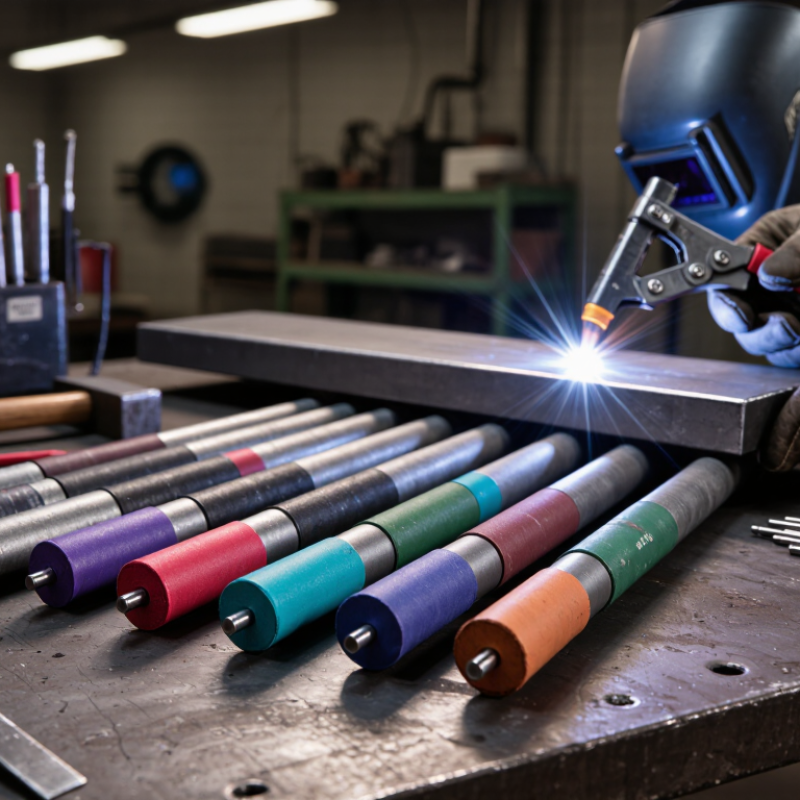
Top Stick Welding Sticks for Beginners and Pros

Understanding Stick Welding Electrodes and Their Classifications

Stick electrodes carry a classification code that describes their basic performance, not every detail of a finished weld. In a code such as E6013, “E” means electrode. The first two digits indicate minimum tensile strength in thousands of pounds per square inch: 60 means 60,000 psi. The next digit identifies approved welding positions. A “1” generally indicates all positions, while “2” covers flat and horizontal fillet welding. The final digit describes the coating type and compatible current.

These details help narrow a choice. E6010 is commonly used with direct current electrode positive and has a forceful arc that can handle some dirty or rusty steel. E6011 can run on AC or direct current, which helps when equipment is limited. E6013 often gives a smoother bead on clean, thin material. E7018 is a low-hydrogen electrode used where stronger, sound welds matter; keep it dry and follow its handling instructions. Small differences matter.

A classification is a starting point, not a guarantee. Joint fit-up, material thickness, machine settings, and travel speed all affect the result. Even a familiar electrode can behave differently on a windy job or awkward joint. Check the electrode’s data sheet, then make a test weld on similar material. Look at the bead and, where appropriate, inspect the root. I would not choose by strength number alone; that shortcut misses position, current, and coating.

Choosing Electrodes by Metal, Position, and Welding Conditions

Choose the electrode to suit the base metal, not just the machine setting. For ordinary carbon steel, AWS A5.1/A5.1M classifies E6010 and E7018 by minimum tensile strengths of 60,000 and 70,000 psi, respectively. Those figures are useful starting points, not a substitute for the material specification or a qualified welding procedure. On thin plate, a smaller rod and controlled arc can help limit burn-through. On thicker joints, confirm the required strength and preparation before choosing a larger diameter.

Position changes the decision. AWS electrode classifications identify which positions a rod is designed for; E6010 and E7018 are commonly used across multiple positions, while the technique and machine polarity still matter. A vertical-up bead needs a steady, short arc. Practice on scrap first. A rod that runs smoothly flat may feel stubborn overhead, and that difference is easy to underestimate.

Conditions matter, too. Wind can disrupt shielding around the arc, while damp storage can compromise low-hydrogen electrodes such as E7018. Keep rods dry and follow the manufacturer’s handling instructions and the job’s welding code. The AWS Welding Handbook discusses how electrode type, joint position, and operating conditions affect weld quality. Still, “all-position” does not mean effortless in every position. Check the classification, match it to the metal, and test the setup on a representative joint before production.

Top Stick Welding Electrodes: Strength and Selection

The chart shows the minimum tensile strength specified by the electrode classification: E6010, E6011, and E6013 are rated at 60 ksi, while E7018 is rated at 70 ksi. Strength alone does not determine the best electrode. E6010 is commonly used for deep penetration with DCEP; E6011 supports AC or DCEP and is useful where surface conditions are less ideal; E6013 offers a softer arc and works with AC or DC; E7018 is a low-hydrogen option commonly used for structural work. Check the electrode and base-metal specifications for position, polarity, and welding conditions.

Beginner-Friendly Stick Electrodes and Their Best Uses

Top Stick Welding Sticks for Beginners and Pros

For clean, thin steel, E6013 is often a forgiving starting point. Its steady arc and easy-to-remove slag can make practice less frustrating. Try it on flat scrap before welding a real joint. AWS’s Welding Handbook describes electrode selection by factors such as base metal, position, and required weld properties; “easy” still depends on machine settings and fit-up. A tight, clean joint matters.

E6011 is useful when a small AC machine is the only option, or the surface is less than pristine. Its forceful arc can dig in, though, so beginners may find it harder to control. E7018 suits stronger joints and produces low-hydrogen weld metal, but electrodes must stay dry as specified by the manufacturer. Damp rods can undermine weld quality. That storage detail is easy to overlook.

Practice has practical value: the U.S. Bureau of Labor Statistics projects about 45,800 annual openings for welders, cutters, solderers, and brazers from 2023 to 2033. That figure includes replacement openings, not just new jobs. Use scrap to compare bead shape, penetration, and slag removal, then keep notes on amperage and electrode size. A neat bead can still conceal poor fusion. Check the joint, not just its appearance.

Professional-Grade Electrodes for Specialized Welding Jobs

Professional-grade stick electrodes earn their place when the job demands more than a tidy bead. Low-hydrogen electrodes are often specified for structural work because they help limit hydrogen-related cracking when handling and storage are controlled. Deep-penetrating cellulosic rods can suit root passes on prepared joints, but they require steady arc control and may not fit every position or procedure. For stainless steel, choose an electrode compatible with the base alloy and service conditions. Match the rod to the metal, joint, position, and power source—not just the package’s strength rating.

Tips: Check the electrode classification and approved welding procedure before striking an arc. Keep low-hydrogen rods dry as directed. A damp electrode can undermine an otherwise careful weld. Fit matters.

Specialty jobs reward preparation. Clean rust, oil, paint, and moisture from the joint, then confirm polarity and amperage against the electrode guidance. On thin material, a smaller diameter and controlled short passes can help reduce burn-through. For cast iron, nickel-based electrodes are commonly used, but preheat and cooling practices depend on the part and repair plan. It is easy to focus too much on tensile strength; compatibility and technique matter just as much. If the bead looks sound but the joint’s requirements are unclear, pause and verify before continuing.

Top Stick Welding Electrodes for Beginners, Pros, and Specialized Jobs

Electrode Classification Minimum Tensile Strength Typical Current Common Positions Typical Applications Skill Level and Practical Notes
E6013 60,000 psi (approximately 414 MPa) AC or DC, depending on the electrode specification All positions; check the electrode diameter and product data sheet General-purpose mild-steel work, light fabrication, sheet metal, and repairs where a smooth bead is desired Beginner-friendly arc starting and relatively easy slag removal. Often a practical choice for thinner material, but correct fit-up and heat control are still important.
E6011 60,000 psi (approximately 414 MPa) AC or DC electrode positive, as specified by the manufacturer All positions Mild-steel repairs, rusty or less-than-clean surfaces, and work where deeper penetration is useful Useful for maintenance and less-than-ideal surface conditions. Its forceful arc and faster-freezing slag can take practice to control.
E6010 60,000 psi (approximately 414 MPa) DC electrode positive (DCEP) All positions, including vertical-down applications where permitted by the procedure Root passes and open-root pipe welding, plus demanding mild-steel repair work Produces a forceful, deeply penetrating arc. Generally better suited to experienced welders and compatible DC power sources.
E7018 70,000 psi (approximately 483 MPa) AC or DC electrode positive, according to the specific classification and product data sheet All positions except vertical-down in typical use Structural and general fabrication work requiring low-hydrogen electrodes and higher-strength weld metal A common professional choice. Requires clean, dry electrodes and sound storage practices; low-hydrogen handling requirements should be followed.
E7024 70,000 psi (approximately 483 MPa) AC or DC electrode positive, depending on the product Flat and horizontal fillet positions High-deposition welding on suitable mild-steel joints, such as long flat seams and horizontal fillets Deposits metal quickly and can produce a smooth bead, but its position limits make it unsuitable for most vertical or overhead work.
E308L-16 70,000 psi (approximately 483 MPa), minimum classification value AC or DC electrode positive, as specified for the product Commonly used in all positions except vertical-down; confirm the product data sheet Joining common 18% chromium–8% nickel stainless steels, including many 304L-type applications Specialized stainless-steel electrode. Select filler metal for the base-metal grade and service conditions, and control heat input to limit distortion.
E312-16 85,000 psi (approximately 586 MPa), minimum classification value AC or DC electrode positive, as specified for the product Commonly used in all positions except vertical-down; confirm the product data sheet Dissimilar-metal joints and some difficult-to-weld steels where a highly crack-resistant weld deposit is appropriate A specialized electrode, not a universal repair solution. Verify compatibility with the base metals, design requirements, and qualified welding procedure.

Tensile values shown are minimum classification requirements, not guaranteed results for every weld. Actual current range, polarity options, position capability, and handling instructions vary by electrode diameter and product; always follow the electrode packaging, data sheet, and applicable welding procedure.

Comparing Electrode Performance, Handling, and Storage Needs

For beginners, E6013 electrodes usually feel forgiving: they strike easily, produce a steady arc, and suit clean, thinner steel. E6010 digs deeper and freezes quickly, but its forceful arc can punish a shaky hand. E7018 often runs smoothly and leaves a tidy bead, yet needs cleaner preparation and careful moisture control. Practice changes the ranking. Fit-up and hand movement matter more than a label suggests.

AWS A5.1/A5.1M classification data distinguishes electrodes by minimum tensile strength: E6010 is in the 60,000-psi class, while E7018 is in the 70,000-psi class. Those figures describe deposited weld metal, not guaranteed results on every joint. AWS welding guidance also emphasizes controlling low-hydrogen electrode exposure. Keep E7018 dry and follow its package instructions and the applicable welding procedure; storage and rebaking requirements vary. A damp rod may still strike, but that does not make it dependable.

Tips: Store rods in sealed containers, off concrete floors, and check for damaged coatings before use. Keep a small practice coupon nearby. Compare arc starts, slag removal, and bead shape under the same settings; notes help, even if they are messy.

MSIRobot