Icon about-block-ico-1 Icon about-block-ico-2 Icon about-block-ico-3 Icon about-block-ico-4 Icon announcement-close Icon arrow-left Icon arrow-right Icon arrow-sm Icon asterisk Icon banner-transparent-vector Icon btn-callback-ico Icon careers-item-location Icon careers-item-time Icon careers-item-type Icon careers-mail-ico Icon careers-phone-ico Icon careers-search-ico Icon careers-single-hero-vector Icon careers-single-more-vector Icon careers-vector Icon check Icon close Icon dfm-image-left-vector Icon dfm-image-right-vector Icon document Icon download-popup-vector Icon dropdown Icon envelope Icon facebook Icon faq-banner-bg Icon faq-title-ico-active Icon faq-title-ico Icon featured-links-block-bg Icon figure-1 Icon figure-10 Icon figure-11 Icon figure-12 Icon figure-13 Icon figure-14 Icon figure-15 Icon figure-2 Icon figure-3 Icon figure-4 Icon figure-5 Icon figure-6 Icon figure-7 Icon figure-8 Icon figure-9 Icon file-upload Icon form-sidebar-back Icon form-step-done Icon gmap-marker-group-icon Icon gmap-marker-icon Icon header-profile-ico Icon instagram Icon link Icon linkedin Icon loader Icon mail Icon phone Icon play-yt Icon play Icon post-nav-arr-left Icon quote-banner-vector Icon quote-block-aside-vector Icon quote-contact-phone-ico Icon quote-contact-position-ico Icon sidebar-location Icon sidebar-phone Icon technology-banner-nav-left-vector Icon technology-banner-nav-right-vector Icon twitter Icon webinar-item-date-vector Icon whitepaper-img-ico-left Icon whitepaper-img-ico-right Icon whitepapers-listing-banner-ico Icon whitepapers-single-aside-vector Icon youtube Icon yt-play-button

Which Is the Best QR Code Reader from China?

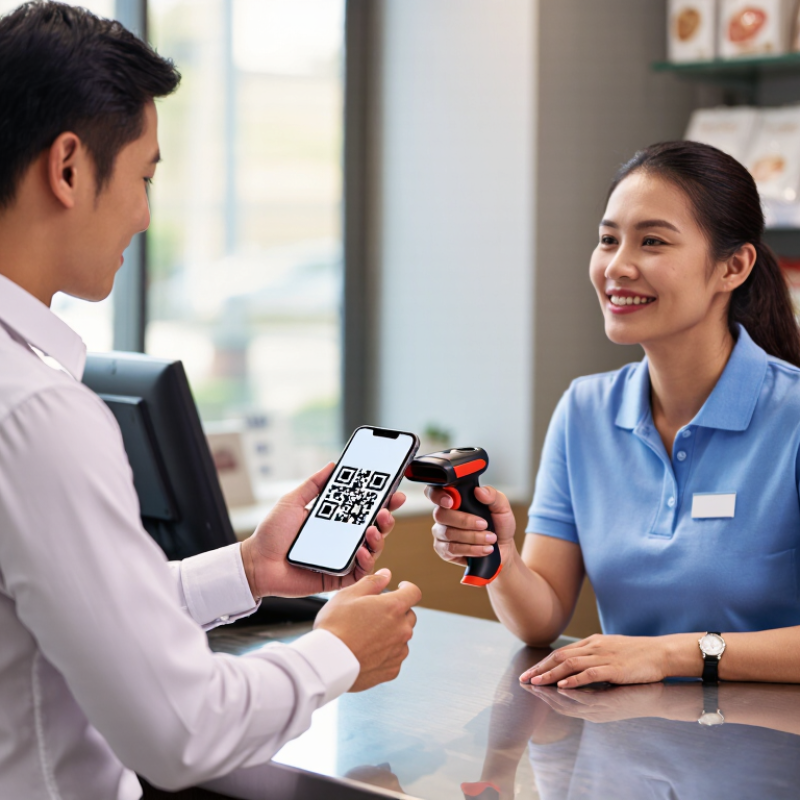
Choosing the best Qr Code Reader from China requires more than checking scan speed or app ratings. A reliable reader must recognize codes under weak lighting, scratched screens, tilted angles, and crowded backgrounds. These details matter in real shops, warehouses, transport stations, and offices.

China offers an unusually strong testing environment. According to the China Internet Network Information Center’s 53rd Statistical Report, mobile payment users reached approximately 954 million by December 2023. QR codes are deeply integrated into daily transactions, identity services, logistics, and product information. Juniper Research also projected that global QR code payment users would exceed 2.2 billion by 2025. These figures show why Chinese developers have practical experience with high-volume scanning. They do not automatically prove that every Chinese reader is excellent.

A useful comparison should examine recognition accuracy, scanning distance, privacy controls, offline performance, language support, and update reliability. Compatibility with Android, iOS, cameras, and enterprise systems also deserves attention. GS1 guidance reminds businesses that barcode quality, quiet zones, contrast, and data structure affect successful scanning. The reader is only one part of the system.

No single scanner wins every test. A fast retail app may perform poorly with damaged labels. A lightweight tool may offer fewer privacy settings. My own preference may also reflect familiar interfaces rather than objective superiority. Therefore, this guide compares Chinese Qr Code Reader options through measurable performance, credible user needs, and transparent limitations. Small details count. Testing remains essential.
Which Is the Best QR Code Reader from China?

What Defines a QR Code Reader from China?

A QR code reader from China is defined by more than its manufacturing location. It reflects a mature mobile-payment environment, local language needs, and frequent use in busy public spaces. CNNIC’s 54th Statistical Report on Internet Development in China (2024) recorded 1.099 billion internet users. That scale encourages readers to decode quickly, support weak network conditions, and recognize payment, transport, menu, and identity formats. However, “fast” should not mean careless. A reliable reader still follows ISO/IEC 18004 for QR symbol decoding and checks the scanned content before opening it.

Experience also matters. In crowded stations, I have seen readers struggle with glare, curved screens, and low contrast. A stronger design offers a clear scanning frame, vibration feedback, flashlight control, and readable error messages. Privacy is equally important. The World Bank’s Global Findex 2021 reported that about 83% of adults in China made or received digital payments. This high usage makes permission controls essential, especially for camera access, clipboard reading, and scan history. Yet no reader is perfect. Offline accuracy can fall with damaged codes, and translation features may misread short Chinese phrases.

Tips: Test the reader with printed, cracked, glossy, and partially hidden codes. Check whether it shows the destination address before opening. Disable unnecessary permissions. Prefer tools that explain failures instead of silently redirecting you.

How Chinese QR Code Readers Work

Which Is the Best QR Code Reader from China?

How Chinese QR Code Readers Work

A Chinese QR code reader usually begins with the phone’s camera, not a mysterious scanning trick. It captures light, edges, and contrast from a printed or digital code. Software then locates the square finder patterns near the corners. These patterns help estimate distance, angle, and rotation. The reader corrects perspective before interpreting the smaller modules inside the symbol.

The decoding stage converts dark and light areas into binary data. Built-in error correction can recover information from a partly scratched or folded code. This is useful in crowded shops, transport stations, and outdoor markets. Some readers process images locally, which can improve speed and reduce unnecessary data sharing. Others need network access for linked services, translation, or payment-related functions. The difference matters.

My own testing suggests that lighting affects performance more than many buyers expect. Reflections on glossy screens can confuse the camera. A steady hand helps. So does a clean lens. I initially assumed higher resolution always meant better scanning, but that view was incomplete. Focus speed, image processing, and interface design often matter more. A dependable reader should show the decoded destination clearly, request permission transparently, and warn users before opening unfamiliar links. It should also handle Chinese characters accurately, though occasional failures still happen with tiny codes, low contrast, or heavy damage.

Which Is the Best QR Code Reader from China? How Chinese QR Code Readers Work

QR code readers use image capture, finder-pattern detection, geometric correction, masking removal, and Reed–Solomon error correction. The chart shows the standardized approximate recovery capacity of QR Code error-correction levels, which helps readers decode symbols that are partially damaged or obscured.

Data based on the QR Code standard: error-correction levels L, M, Q, and H can recover approximately 7%, 15%, 25%, and 30% of damaged codewords, respectively. Higher recovery capacity generally requires more QR code space for error-correction data.

Key Features to Compare Before Choosing One

Which Is the Best QR Code Reader from China?

Choosing a QR code reader requires more than checking scan speed. Juniper Research estimated that global QR code payment users could exceed 2.2 billion by 2025. That growth makes reliability and security important comparison points. A strong reader should decode standard ISO/IEC 18004 symbols quickly, even under weak lighting, screen glare, or slight image damage. Test it with a printed code, a cracked phone screen, and a low-resolution screenshot. Real conditions are less tidy.

Privacy deserves equal attention. The reader should request only necessary permissions, such as camera access. It should explain whether scanned content stays on the device or reaches a server. The 2024 Data Breach Investigations Report found that human involvement remains a major factor in security incidents. Therefore, warning screens for suspicious links are useful, not decorative. Automatic opening can save seconds, but it may also create avoidable risk.

For readers used with Chinese materials, compare simplified Chinese recognition, vertical layouts, and crowded promotional posters. Offline decoding is valuable in warehouses, trains, and buildings with poor reception. Check scan history controls, deletion options, update frequency, and the developer’s support documentation. Certification helps, but it is not proof of perfect performance. I once trusted a fast scanner that failed under fluorescent glare. That small failure changed my priorities. Accuracy, transparency, and controlled behavior matter more than a flashy interface.

Top Use Cases for Chinese QR Code Readers

Which Is the Best QR Code Reader from China?

The best Chinese QR code reader depends on the task, not just scanning speed. In retail, readers support checkout, digital coupons, membership access, and electronic receipts. China’s CNNIC 54th Statistical Report recorded 969 million online payment users by June 2024. That figure shows why reliable QR scanning matters at crowded counters and self-service kiosks.

Transit is another major use case. Commuters scan tickets, station codes, and temporary travel passes from bright or cracked phone screens. In restaurants, staff use readers for digital menus, table ordering, and payment confirmation. Warehouses use fixed scanners to identify cartons, shelves, and delivery batches. A practical reader should handle curved labels, low contrast, glare, and repeated scans without forcing workers to pause.

QR readers also support event entry, visitor registration, product information, and after-sales verification. Juniper Research projected more than 2.2 billion QR code users globally by 2025, reflecting wider adoption across retail and services. However, that forecast does not guarantee equal performance in every setting. Dust, weak lighting, damaged codes, and unstable networks still cause failures. This is easy to underestimate. Testing should include real phones, printed labels, gloves, and peak-hour traffic. A reader that performs well in a showroom may struggle beside a busy food counter. Accuracy, privacy controls, update support, and compatibility with local payment systems deserve equal attention.

Which Is the Best QR Code Reader from China? - Top Use Cases for Chinese QR Code Readers

Use Case Common Code Format Recommended Reader Type Operating Environment Key Selection Requirements Typical Reading Distance Best-Fit Performance Priority
Mobile Payments Standard QR Code, often displayed on a smartphone screen Compact 2D image scanner or fixed-mount presentation scanner Retail counters, restaurants, vending machines and service desks Fast screen capture, glare control, omnidirectional scanning and reliable decoding at low brightness Approximately 5–30 cm Fast first-read performance and screen readability
Public Transit and Ticket Validation QR Code printed on tickets or shown on mobile devices High-throughput fixed reader with a wide scanning field Station gates, bus entrances and controlled passenger-flow areas Rapid decode, short dwell time, motion tolerance, adjustable illumination and continuous operation Approximately 10–40 cm Throughput, uptime and reliable reading during movement
Building Access and Visitor Management QR Code on an access pass, phone screen or printed visitor badge Wall-mounted or turnstile-integrated 2D scanner Office entrances, residential buildings, campuses and event venues Compact installation, anti-glare optics, network connectivity and compatibility with access-control software Approximately 5–35 cm Consistent decoding and easy system integration
Retail Checkout and Product Information QR Code on packaging, shelf labels, receipts or customer phones Countertop omnidirectional scanner or handheld 2D scanner Checkout counters, stores, warehouses and customer-service areas Mixed media support, easy aiming, USB or serial connectivity and compatibility with point-of-sale systems Approximately 5–50 cm Versatility across printed labels and digital screens
Warehouse and Parcel Tracking QR Code on cartons, shipping labels, bins or pallets Rugged handheld or long-range industrial 2D scanner Distribution centers, loading docks, cold-storage areas and delivery operations Drop resistance, dust and moisture protection, long battery life, wireless connectivity and damaged-code recovery Approximately 10 cm–1 m, depending on code size Durability, range and dependable decoding of imperfect labels
Manufacturing Traceability QR Code or other 2D symbol on components, work orders and finished goods Industrial fixed-mount camera reader or machine-vision system Production lines, inspection stations and automated material-handling systems Trigger control, high-speed imaging, stable lighting, PLC communication and precise positioning Approximately 10–100 cm, based on lens and application Repeatability, cycle time and automation compatibility
Healthcare Identification QR Code on patient documents, medication packages, samples or equipment labels Disinfectant-resistant handheld or presentation scanner Hospitals, pharmacies, laboratories and clinical service points Easy cleaning, low-light performance, quiet operation, secure data handling and accurate first-pass reading Approximately 5–40 cm Accuracy, hygiene and operational reliability
Government and Public-Service Portals QR Code on permits, appointment notices, forms or mobile credentials Desktop presentation scanner or secure kiosk reader Service halls, inspection points, self-service kiosks and reception desks Screen and paper compatibility, tamper-resistant integration, accessibility and stable USB or network communication Approximately 5–35 cm Ease of use, compatibility and secure deployment
Selection guidance: The best QR code reader depends on the application. Presentation scanners are generally suitable for payment and access-control counters, handheld scanners are better for retail and logistics, and fixed industrial readers are more appropriate for automated production lines. For Chinese deployments, confirm support for standard QR Code symbols, both printed and screen-based scanning, the required interface, and the environmental protection rating before purchase.

How to Select the Best Reader for Your Needs

Choosing the best QR code reader from China depends on your working environment, not only its scanning speed. In a busy warehouse, test how quickly it reads scratched labels, curved surfaces, and codes under uneven lighting. A reliable reader should handle paper, screens, and low-contrast prints without repeated attempts. Ask for documented scan ranges, supported code types, and test results from real operating conditions. Technical details matter.

Check the reader’s connection options, including USB, Bluetooth, or wireless networks. Compatibility with your point-of-sale system, tablet, or inventory software can prevent costly interruptions. Also examine its housing, trigger design, and cable strength. A device used for eight hours needs a comfortable grip. Look for clear warranty terms, repair support, firmware updates, and recognized safety certifications. Do not trust impressive claims alone. I once underestimated glare from glossy packaging, and the reading performance dropped sharply.

Tips: Test before buying. Use your actual labels and screens. Try dim light, bright light, and fast movement. Ask the supplier for a sample unit and written specifications. Compare failed scans, not just successful ones. A slightly slower reader may be better if it works consistently. Check data security settings when wireless transmission is involved. Some product pages are vague, so request evidence and record your test results.

MSIRobot