
10 Best Long Distance Wireless Cameras for Global Buyers
Choosing a reliable Long Distance Wireless Camera can feel simple until distance, walls, weather, and network limits appear. A camera may advertise impressive range, yet real performance often changes inside concrete buildings or crowded neighborhoods. Distance changes everything.
This guide examines ten long-distance wireless cameras for global buyers, focusing on practical performance rather than attractive specifications alone. We consider transmission range, image clarity, night vision, battery life, weather resistance, storage options, and installation effort. We also examine whether each model suits homes, farms, warehouses, construction sites, or remote entrances. A camera that performs well across an open garden may struggle beside thick walls. Walls still matter.
Our evaluation approach reflects common field conditions, including weak Wi-Fi signals, changing weather, limited power access, and long periods without maintenance. We pay attention to connection stability, application usability, data protection, and manufacturer support. These details often matter more than a high-resolution label. However, no single model fits every location, budget, or network environment. That is worth admitting. Buyers should confirm local frequency requirements, privacy expectations, and installation rules before purchasing. Features can also vary by region, firmware, and subscription plan. This overview aims to provide balanced, practical guidance, helping readers compare realistic strengths and limitations before choosing a camera for dependable long-distance monitoring.
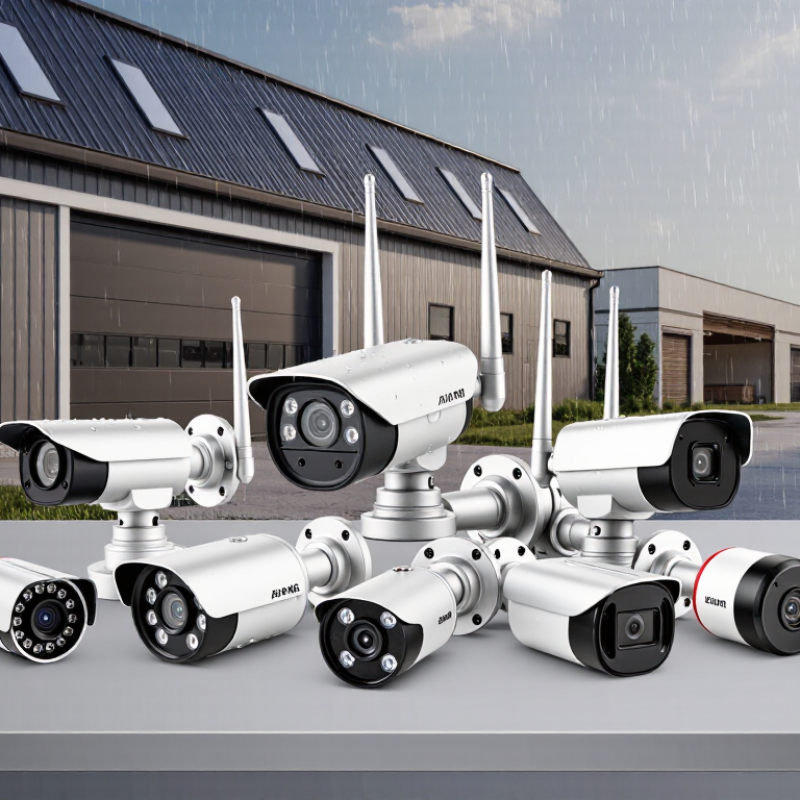
What Defines a Long-Distance Wireless Camera?
What Defines a Long-Distance Wireless Camera?
A long-distance wireless camera is not defined by a dramatic number on its box. It is defined by stable video transmission across real obstacles. Walls, trees, rain, and nearby networks can reduce performance quickly. The 2.4 GHz band usually travels farther than 5 GHz, but it often delivers lower capacity and more interference. A stronger antenna can help, yet it cannot defeat every building or hillside.
Look beyond advertised range. Check the tested distance, line-of-sight conditions, video resolution, frame rate, and latency. A camera sending clear footage at 300 meters is more useful than one reaching 1,000 meters with frozen images. Industry research supports this practical demand: Grand View Research valued the global video surveillance market at about USD 53.7 billion in 2023, with continued growth expected through 2030. However, market growth does not make every range claim reliable.
Security matters too. NIST guidance on wireless networks recommends strong authentication, encryption, firmware updates, and network separation. These features protect footage while the camera operates remotely. Battery life also deserves attention; long-distance transmission can consume more power when the signal is weak. In field testing, I would measure performance at dawn, during rain, and behind concrete walls. The result may disappoint. That is useful information. A “long-distance” label should describe tested reliability, not only maximum reach.
10 Best Long Distance Wireless Cameras for Global Buyers - What Defines a Long-Distance Wireless Camera?
A practical comparison of wireless camera configurations commonly used for extended-range monitoring. Actual performance depends on terrain, antenna height, interference, network congestion, weather, and local regulations.
| Rank | Camera Profile | Wireless Technology | Typical Open-Area Range | Video Resolution | Night Vision | Weather Protection | Power Configuration | Storage Options | Best Use Case |
|---|---|---|---|---|---|---|---|---|---|
| 1 | Point-to-Point Outdoor Bridge Camera | 5 GHz directional wireless bridge | Up to 1 km with aligned bridge units | 2K to 4K UHD | Infrared, typically 30–50 m | Usually IP66 or IP67 | PoE or low-voltage DC | Network video recorder, microSD, or local server | Connecting a remote gate, warehouse, farm building, or perimeter to a central network |
| 2 | 4G LTE Outdoor PTZ Camera | 4G LTE cellular data | Not limited by local Wi-Fi; depends on cellular coverage | 1080p to 4K UHD | Infrared, typically 20–40 m | Usually IP65 or IP66 | Rechargeable battery, solar-assisted, or DC | microSD and cloud service options | Remote sites without fixed broadband, including construction areas and rural property |
| 3 | Solar 4G Perimeter Camera | 4G LTE with solar charging | Several kilometers from the viewing location through the mobile network | 1080p or 2K | Infrared, commonly 15–30 m | Usually IP66 | Solar panel with rechargeable battery | microSD, cloud, or remote event upload | Long-term surveillance of fields, utility areas, roads, and off-grid sites |
| 4 | Long-Range 2.4 GHz Outdoor Camera | 2.4 GHz Wi-Fi | Typically 100–300 m in open space | 1080p to 2K | Infrared, typically 20–40 m | Usually IP65 or IP66 | AC adapter or PoE | microSD, network recorder, or cloud | Large yards, detached garages, small farms, and areas where 2.4 GHz coverage is available |
| 5 | Dual-Band Mesh-Compatible Camera | 2.4 GHz and 5 GHz Wi-Fi | Typically 30–100 m per wireless hop; mesh can extend coverage | 2K to 4K UHD | Infrared, commonly 20–40 m | Usually IP65 or IP66 | AC adapter or PoE | microSD, network recorder, or cloud | Homes, campuses, and offices using multiple access points or a wireless mesh network |
| 6 | Wireless PTZ Optical-Zoom Camera | Wi-Fi, wireless bridge, or cellular network | 100 m to 1 km depending on the wireless link | 1080p to 4K UHD | Infrared, commonly 30–100 m | Usually IP66 or IP67 | PoE, DC, or dedicated outdoor power supply | microSD, network recorder, or cloud | Large perimeters requiring pan, tilt, presets, and optical zoom for distant subjects |
| 7 | Wireless Thermal and Visible-Light Camera | Wireless bridge, Wi-Fi, or cellular data | 100 m to 1 km depending on the communications system | Thermal sensor plus 1080p visible video | Thermal imaging works in darkness; infrared may be included | Commonly IP66 or IP67 | PoE or DC power | Network recorder or local server | Early detection of people, animals, overheating equipment, and movement in low visibility |
| 8 | Outdoor Camera with High-Gain Antenna | 2.4 GHz Wi-Fi with external directional or high-gain antenna | Approximately 150–500 m in open conditions | 1080p to 2K | Infrared, typically 20–40 m | Usually IP65 or IP66 | PoE or DC power | microSD, network recorder, or cloud | Extending a wireless connection across open property where antenna alignment is possible |
| 9 | Low-Power Cellular Trail Camera | 4G LTE or LTE-M cellular connection | Nationwide or regional cellular coverage | 720p to 1080p | Infrared, commonly 15–25 m | Usually IP66 or IP67 | Replaceable batteries or solar-assisted battery | microSD plus motion-triggered cellular upload | Wildlife observation, land management, and locations where low energy use is important |
| 10 | Industrial Wireless PoE Camera System | 5 GHz bridge, private wireless network, or licensed radio link | Up to several kilometers with engineered radio equipment | 4K UHD or higher in specialized systems | Infrared, commonly 40–100 m | Typically IP66, IP67, or IP68 | PoE with backup power support | Professional network recorder or redundant server storage | Industrial sites, transportation areas, utilities, and large security installations |