10 Best Flex Circuit Benefits for Electronics Design Innovation?
Flex circuits have revolutionized the landscape of electronics design. They offer numerous benefits that enhance innovation across various applications. With their unique properties, flex circuits enable designers to create compact and efficient solutions. This leads to lighter products that are easier to assemble and integrate.
One of the key advantages of flex circuits is their adaptability. They can easily fit into tight spaces, making them ideal for modern devices. Designers face challenges in achieving both performance and size. Flex circuits help bridge this gap, allowing for intricate designs without sacrificing functionality. Additionally, these circuits can withstand repeated bending, which is essential for wearables and mobile electronics.
Despite the clear benefits, there are areas for growth. Not every design team fully capitalizes on the potential of flex circuits. Some may overlook them due to cost considerations. However, the long-term savings and efficiency gains can outweigh initial expenses. Flex circuits are not just another component; they are a pathway to innovation in electronics design.

Understanding Flex Circuits in Electronics Design
Flex circuits, or flexible printed circuits, are an essential component in modern electronics design. They allow for complex circuit configurations while enabling space-saving designs. These circuits can bend, twist, and fold without losing functionality. This flexibility opens up new possibilities for innovative electronic devices. Designers can create compact layouts that fit unique shapes and tight spaces.
Understanding flex circuits involves recognizing their layers. Typically, they consist of conductive traces laminated between flexible materials. These layers can be customized for various applications. For example, they can enhance connectivity in wearable devices. However, challenges exist. Manufacturing processes can be tricky, and quality control is vital. Small errors may lead to performance issues and malfunctions.
Flex circuits also enable lightweight designs, which is crucial for portable electronics. However, their durability may raise concerns in harsh environments. Designers need to consider the materials used. Transparency and testing are critical for success in projects. As innovations continue, the role of flex circuits will likely expand, presenting both opportunities and challenges in electronics design. In this evolving landscape, adaptability and foresight are essential for achieving desired outcomes.
Enhanced Design Flexibility with Flex Circuits
Flex circuits offer remarkable design flexibility, a significant advantage in electronics innovation. Traditional rigid circuits often limit the integration of components. Flex circuits enable compact designs that fit in unconventional spaces. This adaptability encourages creativity in product development, allowing engineers to experiment with unique layouts. According to a recent industry report, the flex circuit market is expected to grow by 12% annually, reflecting this rising demand.
The lightweight nature of flex circuits contributes to reduced overall device weight. This is crucial in industries like aerospace and consumer electronics, where weight savings translate to better performance and efficiency. Additionally, their durability against bending and twisting enhances long-term reliability. Studies indicate that applications using flex circuits can achieve a failure rate of less than 0.5%. However, despite these advancements, challenges remain.
Designing with flex circuits requires careful planning and expertise. Engineers must ensure compatibility between components and materials. The manufacturing process can also introduce complexities. As designs become more intricate, the risk of errors increases. Continuous education and innovation are vital. Embracing flex circuits means embracing an iterative design approach, where learning from mistakes paves the way for future breakthroughs.
Cost-Effectiveness of Flex Circuits in Production
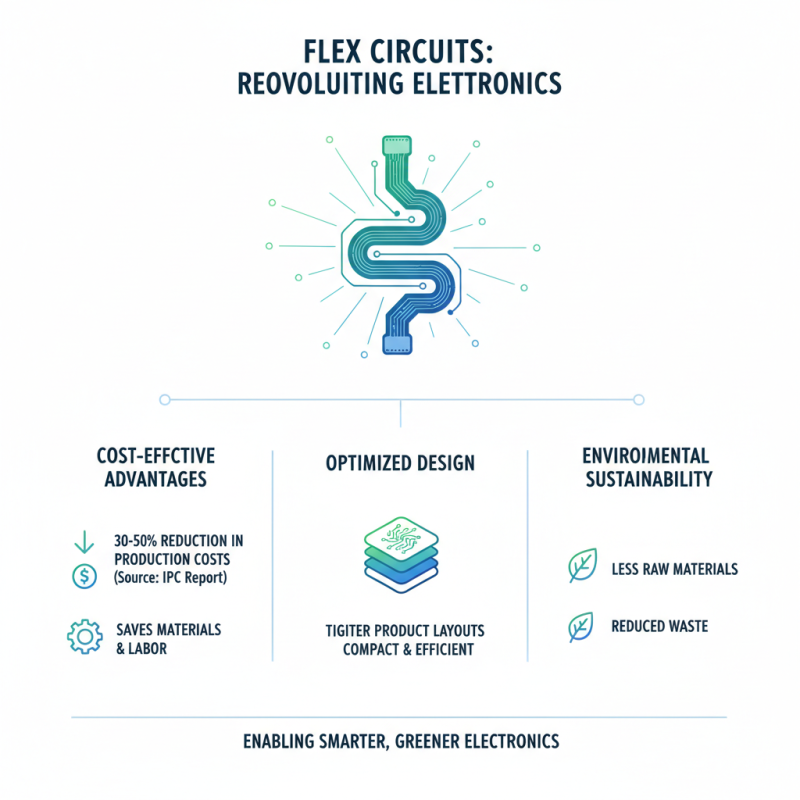
Flex circuits are transforming the electronics industry with their cost-effective advantages. According to a report by the IPC, flexible printed circuits can reduce production costs by 30% to 50%. These circuits save on materials and labor by optimizing space and design. With tighter product designs becoming essential, flex circuits allow for a more compact layout, which can lower the amount of raw materials needed. This reduces waste and contributes to environmental sustainability.
Moreover, the ability of flex circuits to fit into intricate geometries can lead to significant savings in assembly costs. Traditional rigid circuits require additional support and handling, increasing expenses. The versatility of flex circuits simplifies assembly processes. A study by the IEEE states that companies can expect a 20% reduction in assembly time when using flex technology. However, there are challenges. Initial setup costs can be high, and not all designs benefit equally from flex technology. Careful consideration is necessary to determine if the benefits justify the investments. Not every project is suitable for flex circuits, requiring careful analysis of individual cases.
Weight Reduction Benefits of Flexible Circuit Technology
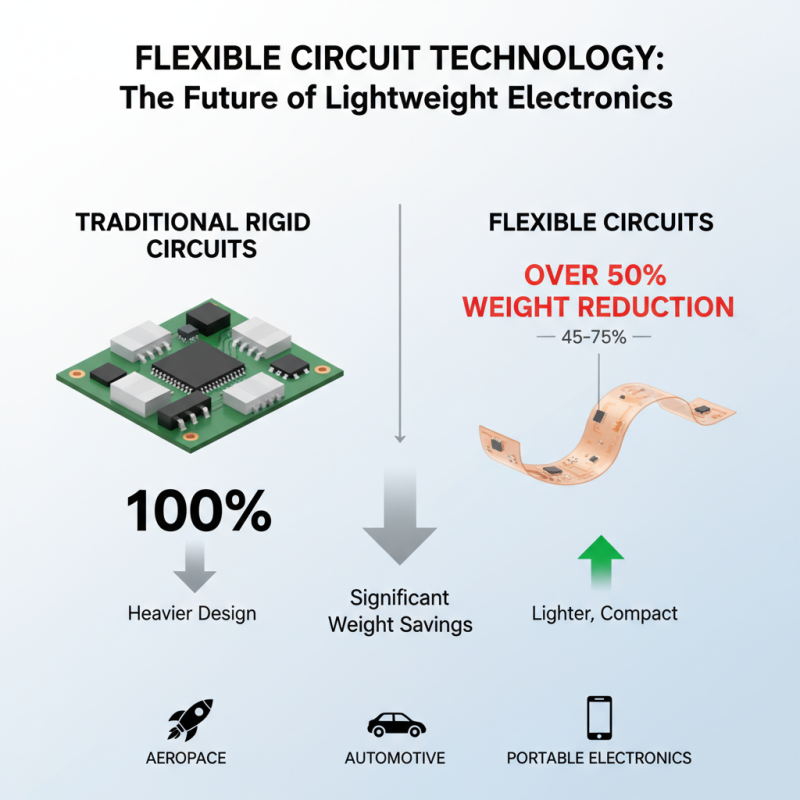
Flexible circuit technology significantly contributes to weight reduction in electronic designs. This innovation often results in a reduction of over 50% in weight compared to traditional rigid circuits. With electronics becoming more compact, weight is a critical factor. In sectors like aerospace and automotive, every gram counts. A lighter design can enhance efficiency and fuel economy.
Using flexible circuits allows for intricate designs that fit into limited spaces. They can be customized to contort and align with the product’s shape. This adaptability minimizes the need for additional support materials, further decreasing overall weight. Additionally, flexible circuits can integrate multiple functions into a single layer. This integration not only reduces material usage but also simplifies assembly.
**Tip:** When designing with flexible circuits, consider potential thermal and mechanical stresses. Analyze how these factors might affect performance.
However, engineers must be cautious. The transition to flexible circuits can introduce new challenges. Understanding their limitations in high-frequency applications is essential. Not all flexible materials perform equally, which could lead to unexpected results.
**Tip:** Conduct thorough testing during the design phase to identify any weak points. This proactive approach can help avoid costly revisions.
Improved Reliability and Durability of Flex Circuits
Flex circuits have transformed electronics design by enhancing reliability and durability. Unlike traditional rigid circuits, flex circuits can bend and twist without breaking. This flexibility helps to protect the delicate connections, especially in dynamic environments. Due to their ability to conform to various shapes, they fit into tight spaces easily, making them ideal for modern gadgets.
One key benefit is their resistance to fatigue. Flex circuits can endure repeated movements without cracking. This quality extends the lifespan of electronic devices, reducing failure rates. For applications where vibration is common, using flex circuits minimizes the risk of electrical faults.
When designing with flex circuits, consider the materials. Choosing high-grade substrates can significantly improve performance. Also, consistent testing is vital. Monitor the bend radius during the prototype phase. Small adjustments can make a big difference in durability. Remember, not all designs require maximum flexibility. Sometimes, a balance between flexibility and stability is the best route.
10 Best Flex Circuit Benefits for Electronics Design Innovation