Icon about-block-ico-1 Icon about-block-ico-2 Icon about-block-ico-3 Icon about-block-ico-4 Icon announcement-close Icon arrow-left Icon arrow-right Icon arrow-sm Icon asterisk Icon banner-transparent-vector Icon btn-callback-ico Icon careers-item-location Icon careers-item-time Icon careers-item-type Icon careers-mail-ico Icon careers-phone-ico Icon careers-search-ico Icon careers-single-hero-vector Icon careers-single-more-vector Icon careers-vector Icon check Icon close Icon dfm-image-left-vector Icon dfm-image-right-vector Icon document Icon download-popup-vector Icon dropdown Icon envelope Icon facebook Icon faq-banner-bg Icon faq-title-ico-active Icon faq-title-ico Icon featured-links-block-bg Icon figure-1 Icon figure-10 Icon figure-11 Icon figure-12 Icon figure-13 Icon figure-14 Icon figure-15 Icon figure-2 Icon figure-3 Icon figure-4 Icon figure-5 Icon figure-6 Icon figure-7 Icon figure-8 Icon figure-9 Icon file-upload Icon form-sidebar-back Icon form-step-done Icon gmap-marker-group-icon Icon gmap-marker-icon Icon header-profile-ico Icon instagram Icon link Icon linkedin Icon loader Icon mail Icon phone Icon play-yt Icon play Icon post-nav-arr-left Icon quote-banner-vector Icon quote-block-aside-vector Icon quote-contact-phone-ico Icon quote-contact-position-ico Icon sidebar-location Icon sidebar-phone Icon technology-banner-nav-left-vector Icon technology-banner-nav-right-vector Icon twitter Icon webinar-item-date-vector Icon whitepaper-img-ico-left Icon whitepaper-img-ico-right Icon whitepapers-listing-banner-ico Icon whitepapers-single-aside-vector Icon youtube Icon yt-play-button

What Is the Best 12V RV Fridge from China?

Choosing the best 12v Rv Fridge from China requires more than comparing prices and polished product photos. A refrigerator may look impressive online, yet perform poorly on a hot road trip. Real value appears in daily details: stable cooling, low battery consumption, quiet operation, and a door that stays sealed over rough roads. A reliable 12V refrigerator should also handle changing temperatures inside a camper, from warm coastal campsites to cold mountain mornings. Small details matter.

This guide examines Chinese-made 12v Rv Fridge options through practical experience, technical specifications, and supplier reliability. It considers compressor quality, insulation thickness, usable storage, wiring protection, temperature control, and solar compatibility. Product testing data and warranty terms deserve equal attention. A low advertised wattage means little if the compressor runs constantly. That point is easy to overlook.

The “best” model depends on your travel habits, available battery capacity, and installation space. A compact unit may suit weekend travelers, while full-time users may need stronger insulation and easier maintenance. Customer reviews can reveal loose hinges, noisy fans, or weak after-sales support. Still, reviews are not perfect evidence. Some may be outdated or overly emotional.

I have found that honest comparisons require patience. Specifications can vary between batches, and supplier claims should be checked carefully. Certifications, factory communication, spare-part access, and clear return policies add confidence. This introduction sets a practical direction for evaluating the best 12v Rv Fridge from China without treating any single model as universally superior. Performance matters most. Price comes later.
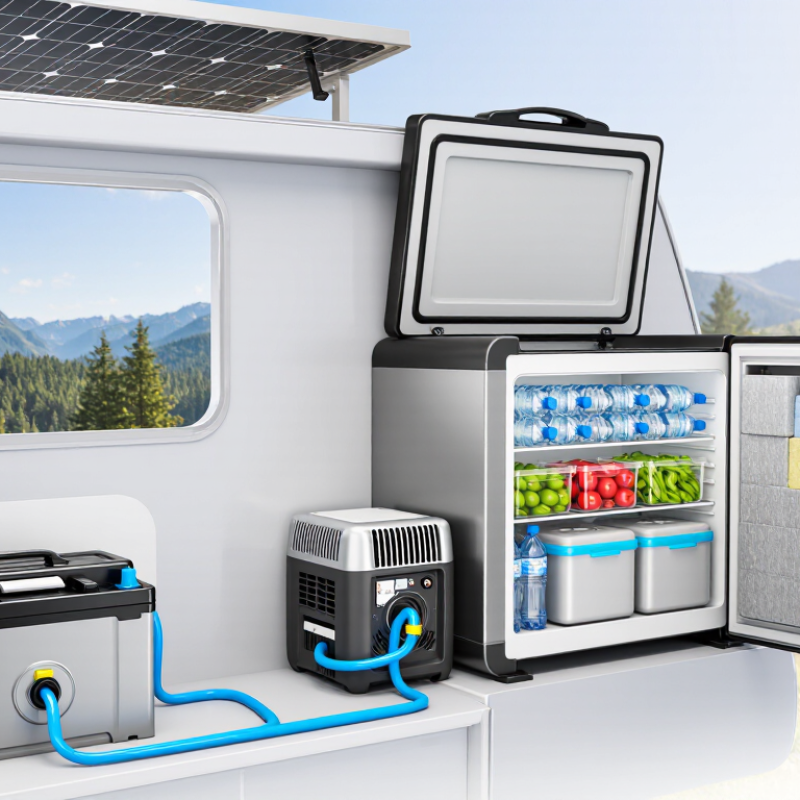
What Is the Best 12V RV Fridge from China?

What Is a 12V RV Fridge and How Does It Work?

A 12V RV fridge is a compact refrigerator designed to run from a vehicle or leisure battery. Unlike absorption models, it uses a compressor and refrigerant circuit. The compressor raises the refrigerant’s pressure and temperature. The condenser then releases heat outside the cabinet. After expansion, the refrigerant becomes cold and absorbs heat inside the fridge. That cycle keeps food chilled, even when the vehicle is moving.

In practical use, insulation matters as much as compressor size. A well-sealed door reduces cycling and saves battery power. A small unit may consume 30 to 60 amp-hours daily, depending on temperature and ventilation. Hot weather increases the workload. Weak wiring can also cause voltage drops and poor cooling. It is easy to overlook this detail. When comparing a 12V RV fridge from China, check the compressor specification, insulation thickness, wiring recommendations, and independent safety test reports. Ask for cooling tests at different ambient temperatures. Do not trust capacity figures alone. I have seen compact cabinets waste energy because their door seals fitted badly. A simple seal inspection can reveal more than attractive product photos. Adequate airflow around the compressor remains essential, especially inside a tight camper cabinet. A solar panel can help, but cloudy days still require battery capacity. Some assumptions fail. Test the fridge under real travel conditions before relying on it for food storage.

What Is the Best 12V RV Fridge from China? - What Is a 12V RV Fridge and How Does It Work?
Fridge Type How It Works Typical Capacity Power Input Typical Energy Use Cooling Performance Noise Level Main Advantages Main Limitations Best Use
12V Compressor Refrigerator A motor-driven compressor circulates refrigerant through a closed vapor-compression system to remove heat from the cabinet. 30–200 L 12V DC or 24V DC; many units also accept 100–240V AC through an adapter. Approximately 0.3–1.2 kWh per 24 hours, depending on size, ambient temperature, insulation, and thermostat setting. Usually reaches about 0°C to 10°C in the refrigerator compartment; freezer sections can commonly reach approximately −18°C. Approximately 35–50 dB during compressor operation. Fast cooling, efficient battery operation, reliable performance in warm weather, and the ability to freeze food. Higher purchase cost than basic thermoelectric units; compressor start-up current must be supported by the wiring and battery system. Best overall choice
12V Compressor Portable Fridge A compact compressor cooling circuit operates inside a portable insulated case, often with a digital thermostat. 15–60 L 12V DC or 24V DC; commonly supplied with a vehicle socket cable and an AC adapter. Approximately 0.2–0.8 kWh per 24 hours, depending on capacity and ambient conditions. Typically adjustable from around +10°C down to −20°C; actual freezer performance varies by design. Approximately 35–48 dB. Easy installation, low energy demand, strong cooling, and convenient portability. Limited storage volume and less organized interior space than a built-in RV refrigerator. Small RVs and camper vans
Absorption Refrigerator with 12V Controls A heat source drives an ammonia-water absorption cycle. The 12V connection usually powers the control board and ignition rather than providing the main cooling energy. 60–180 L 12V DC for controls; commonly designed for LPG and/or 120V or 230V AC operation. Electrical consumption varies widely; LPG use is commonly about 0.2–0.5 kg per 24 hours when operating on gas. Normally maintains approximately 0°C to 8°C in the refrigerator compartment, but performance decreases in high ambient temperatures. Very quiet because there is no continuously running compressor. Can operate from LPG when shore power or sufficient battery capacity is unavailable. Slower cooling, requires near-level installation, lower efficiency, and needs proper ventilation and gas safety measures. Long off-grid trips with an approved LPG system
Thermoelectric Cooler A Peltier module transfers heat from one side of the unit to the other when DC power passes through it. 10–50 L 12V DC; some models include an AC adapter. Approximately 0.4–1.0 kWh per 24 hours because the cooling module may run continuously. Often cools approximately 15–25°C below ambient temperature; it normally cannot maintain freezer temperatures. Approximately 35–55 dB because of the cooling fan. Simple construction, low initial cost, lightweight design, and no refrigerant compressor. Weak performance in hot weather, continuous power demand, condensation, and limited food-storage capability. Short trips and beverage cooling
Built-In Dual-Zone Compressor Refrigerator One or two compressor-controlled compartments provide independent refrigerator and freezer temperature management. 50–100 L 12V DC or 24V DC; some models support AC through an external or integrated power supply. Approximately 0.6–1.5 kWh per 24 hours, depending on compartment temperatures and ambient conditions. Commonly provides a refrigerator zone near 0°C to 10°C and a freezer zone near −18°C. Approximately 38–52 dB. Separate temperature zones, practical food organization, and dependable freezing during extended travel. Uses more space and power than a single-zone unit and generally costs more. Family RVs and long journeys
Selection guide: For most RVs, a 12V compressor refrigerator is the most efficient and versatile option because it cools quickly, works well in warm weather, and can operate directly from a battery system. Actual energy use depends on cabinet size, insulation, ambient temperature, ventilation, door-opening frequency, and the selected temperature.

Which Types of 12V RV Fridges Are Made in China?

China produces several practical types of 12V RV fridges for different travel layouts and power systems. The most common type is the compressor fridge. It cools quickly, works reliably in warm weather, and usually fits solar-powered RV setups. These units appear as upright, chest, drawer, and portable designs.

A 12V upright fridge resembles a small household refrigerator and suits permanent kitchen installations. Drawer fridges save space under seating or counters.

Portable compressor fridges are easier to move between an RV, boat, and campsite. Dual-zone models provide separate cooling and freezing areas, although they normally consume more energy.

Some Chinese manufacturers also produce absorption fridges, but their cooling performance can vary with outside temperature and vehicle leveling. That difference is easy to underestimate.

Tips: Check the compressor rating, insulation thickness, ventilation clearance, and low-voltage protection. A fridge drawing two different current levels needs careful battery planning. Measure the cabinet opening twice. A small error can delay installation.

In practical RV use, compressor models are often the safer choice for frequent travel and uneven parking. Look for food-safe interior materials, strong door seals, replaceable hinges, and clear temperature controls.

Ask for tested noise levels and energy consumption at realistic ambient temperatures. Marketing figures may use ideal laboratory conditions.

I would also inspect the warranty process and spare-part availability before purchasing. A cheaper unit is not always economical if its fan or controller fails far from home.

Some products look similar externally, but their insulation and wiring quality can differ considerably.

What Features Define the Best Chinese 12V RV Fridge?

The best Chinese 12V RV fridge is defined by dependable performance, not simply a low purchase price.

In practical RV use, a compressor model should cool food to about 2–4°C without exhausting the battery overnight. Stable temperature control matters during hot afternoons. A clear display helps users check conditions quickly. The thermostat should respond smoothly, without wide temperature swings. Small details matter.

Efficient power management is equally important. A reliable unit should include low-voltage protection and a properly rated fuse. It should start without creating a harsh battery surge. Thick insulation, a tight lid seal, and a well-designed compressor reduce energy loss.

Check the cable length and connector quality before installation. Weak wiring can cause voltage drops. That issue is easy to overlook.

Noise performance also deserves attention, especially inside a compact sleeping area. Published decibel figures should be tested against real campsite conditions.

Durability separates a useful fridge from a disappointing one. Strong hinges, secure latches, corrosion-resistant materials, and vibration-resistant construction support long journeys.

Removable baskets make cleaning easier and improve access to food. I once focused too heavily on capacity, then found that an awkward interior wasted valuable space. That was a useful correction.

Clear warranty terms, available replacement parts, safety documentation, and responsive technical support show stronger manufacturing discipline. A perfect product is unlikely, but transparent specifications make its weaknesses easier to judge.

How to Compare Chinese 12V RV Fridge Brands and Models?

The best Chinese 12V RV fridge depends on your travel habits, not just its price.

Compare models by capacity, compressor type, power draw, insulation, and installation space. A 40-liter chest fridge may suit a couple, while an upright model offers easier access. Measure the cabinet opening carefully. A few millimeters can create serious fitting problems.

Ask for measured performance, not attractive marketing claims. Check how long the fridge takes to cool from 25°C to 4°C. Review average current consumption, startup surge, noise level, and low-voltage protection. Noise matters at night.

Test the lid seal and inspect the hinge, basket, wiring, and ventilation path. A strong compressor is useful, but poor airflow can still waste energy. I once focused too heavily on cooling speed and underestimated battery usage.

Reliability also depends on support after purchase. Compare warranty length, spare-part availability, wiring diagrams, and response times from the seller. Confirm that the electrical protection and documentation suit your destination market.

Read reviews from long-term RV users, especially those traveling in hot weather. One complaint may be random; repeated reports of failed controllers deserve attention. A lower price can become expensive when a replacement part takes weeks to arrive.

Specs can mislead. A careful comparison should balance tested performance, service access, practical design, and total ownership cost.

How to Choose the Right 12V RV Fridge for Your RV?

What Is the Best 12V RV Fridge from China?

Choosing the right 12V RV fridge starts with your travel habits, not its appearance. Measure the cabinet opening, door clearance, and available ventilation space. A fridge that fits tightly may cool poorly on hot afternoons. For weekend trips, a compact 40–50 liter model may be enough. Longer journeys often need separate freezer space and stronger insulation.

Check the compressor’s power draw, voltage range, and battery protection settings. A reliable unit should maintain stable cooling while your RV moves over uneven roads. Ask for temperature test data, wiring details, and replacement-part availability. Also verify safety certifications accepted in your destination. Product descriptions can sound impressive, but actual performance may differ. That is an important weakness to examine.

Tips: Test the fridge before installation. Place a thermometer inside and monitor it for 24 hours. Check noise during nighttime charging. Inspect the plug, fuse, hinges, and seal for small defects. Leave airflow around the compressor. A little space helps heat escape. If you use solar power, calculate daily consumption during cloudy weather, not only bright sunshine. A lower price can become expensive when service is slow or parts are difficult to obtain.

MSIRobot