Icon about-block-ico-1 Icon about-block-ico-2 Icon about-block-ico-3 Icon about-block-ico-4 Icon announcement-close Icon arrow-left Icon arrow-right Icon arrow-sm Icon asterisk Icon banner-transparent-vector Icon btn-callback-ico Icon careers-item-location Icon careers-item-time Icon careers-item-type Icon careers-mail-ico Icon careers-phone-ico Icon careers-search-ico Icon careers-single-hero-vector Icon careers-single-more-vector Icon careers-vector Icon check Icon close Icon dfm-image-left-vector Icon dfm-image-right-vector Icon document Icon download-popup-vector Icon dropdown Icon envelope Icon facebook Icon faq-banner-bg Icon faq-title-ico-active Icon faq-title-ico Icon featured-links-block-bg Icon figure-1 Icon figure-10 Icon figure-11 Icon figure-12 Icon figure-13 Icon figure-14 Icon figure-15 Icon figure-2 Icon figure-3 Icon figure-4 Icon figure-5 Icon figure-6 Icon figure-7 Icon figure-8 Icon figure-9 Icon file-upload Icon form-sidebar-back Icon form-step-done Icon gmap-marker-group-icon Icon gmap-marker-icon Icon header-profile-ico Icon instagram Icon link Icon linkedin Icon loader Icon mail Icon phone Icon play-yt Icon play Icon post-nav-arr-left Icon quote-banner-vector Icon quote-block-aside-vector Icon quote-contact-phone-ico Icon quote-contact-position-ico Icon sidebar-location Icon sidebar-phone Icon technology-banner-nav-left-vector Icon technology-banner-nav-right-vector Icon twitter Icon webinar-item-date-vector Icon whitepaper-img-ico-left Icon whitepaper-img-ico-right Icon whitepapers-listing-banner-ico Icon whitepapers-single-aside-vector Icon youtube Icon yt-play-button

2026 Best Types of 430 Stainless Steel Strips?

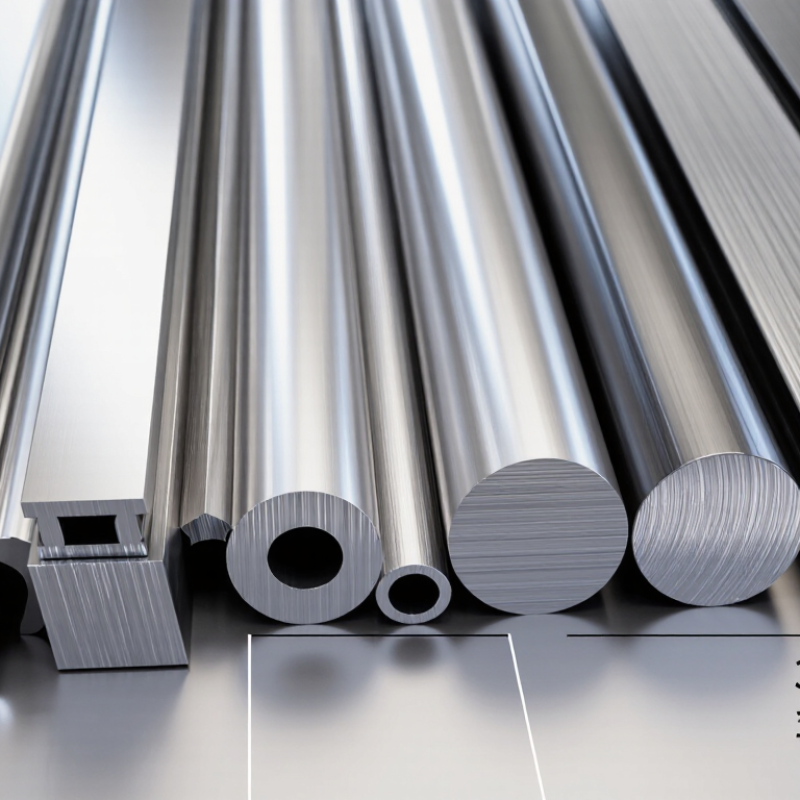
Choosing the best 430 Stainless Steel Strips in 2026 requires more than comparing price, thickness, or surface shine. Grade 430 is a ferritic stainless steel with useful magnetic response, moderate corrosion resistance, and reliable performance in many indoor and mildly corrosive environments. It contains little or no nickel in standard production, which can support cost stability. However, it is not the right choice for every application.

This guide examines practical strip types, including annealed, half-hard, full-hard, precision-slit, and polished finishes. Each option behaves differently during forming, stamping, welding, and installation. Annealed strips usually offer better flexibility for deep bends. Hardened strips can provide stronger springback and improved wear resistance. A bright-annealed surface may suit decorative panels, while a brushed finish can hide fingerprints and minor scratches. Small details matter.

Real purchasing decisions should connect material data with actual working conditions. A kitchen component, electrical enclosure, automotive trim part, and heat shield may need different strip properties. ASTM A240 and ASTM A480 references can help verify chemistry, dimensions, tolerances, and surface condition. Mill test certificates, hardness results, and salt-spray data also deserve careful review. Supplier reputation helps, but documentation matters more.

No grade wins every test. I would not select 430 Stainless Steel Strips only because they look clean or cost less. Edge cracking, inconsistent hardness, and poor slitting can create expensive problems later. Some comparisons also overlook forming direction and storage moisture. That weakness is worth admitting. The best choice depends on thickness, temper, finish, tolerance, fabrication method, and service environment. This article provides a practical framework for making that decision with greater confidence.
2026 Best Types of 430 Stainless Steel Strips?

430 Stainless Steel Strip: Definition, Composition, and Key Properties

430 stainless steel strip is a ferritic stainless grade identified as UNS S43000. It normally contains 16–18% chromium, with carbon limited to 0.12% maximum. Iron forms the balance, while nickel remains low, often below 0.75%, according to ASTM A240/A240M. Its ferritic structure makes the strip magnetic. It also offers useful oxidation resistance, moderate corrosion resistance, and good formability in annealed conditions.

The material suits appliance panels, trim, kitchen equipment, and architectural interiors. Its typical minimum tensile strength is about 450 MPa, with a 205 MPa yield strength under ASTM requirements. Surface condition changes the result. Cold rolling can improve thickness control and appearance, but may reduce ductility. Global stainless production reached approximately 58.4 million tonnes in 2023, reported by the International Stainless Steel Forum. That figure shows the market’s scale, not a guarantee that 430 fits every application. It performs less reliably than austenitic grades in chloride-rich or marine environments. This limitation is easy to overlook.

Tips: Check the mill certificate, thickness tolerance, surface finish, and magnetic response before purchasing. Confirm the exact standard. Actual corrosion performance still depends on cleaning, forming, and service exposure. A careful test panel is often wiser than relying only on a catalogue value.

Main Types of 430 Stainless Steel Strips by Finish and Manufacturing Method

430 stainless steel strips are commonly classified by surface finish and manufacturing method. Cold-rolled 2B strips have a smooth, functional surface after annealing and pickling. They suit appliance panels, brackets, and general fabrication. BA strips receive bright annealing, creating a reflective surface with fewer visible marks. Polished and brushed strips add controlled appearance. Brushed finishes are useful when fingerprints and directional scratches matter. Hot-rolled, annealed, and pickled strips are thicker and less decorative, but they can offer practical cost and forming advantages.

Manufacturing route changes performance. A typical strip begins with hot rolling, followed by cold reduction, annealing, pickling, slitting, and leveling. Tighter cold reduction can improve thickness control, although excessive hardness may reduce forming flexibility.

The World Stainless Association reported 58.4 million tonnes of global stainless crude steel production in 2023, showing the scale behind these established processes. ASTM A240 remains a key reference for chromium-nickel stainless plate, sheet, and strip requirements. Still, buyers should confirm the exact product standard and temper. Names can vary between suppliers.

Tips: Match finish to use, not appearance alone. Check thickness tolerance, hardness, edge condition, and surface roughness before ordering. A mirror-like strip may look impressive but can reveal handling damage quickly. For bending, test a sample across the intended radius. One overlooked detail is coil direction. It can affect brushing, slitting, and installation consistency. Industry reports provide useful benchmarks, but real production trials remain more reliable for demanding applications.

How to Select 430 Stainless Steel Strip for Different Applications

2026 Best Types of 430 Stainless Steel Strips: Selecting the Right Grade

Selecting 430 stainless steel strip starts with the application, not the finish. ASTM A240 lists about 16–18% chromium, with minimum tensile strength near 450 MPa and yield strength near 205 MPa. These values suit appliance panels, kitchen equipment, indoor trim, and automotive decorative parts. However, 430 is ferritic and offers limited deep-drawing performance. Sharp bends may crack when the strip is too hard or too thin.

Choose a 2B finish for practical forming and general equipment. Select BA or polished surfaces when appearance matters. A brushed finish can hide fingerprints and light scratches.

For coastal or chloride-rich environments, reconsider 430. Its corrosion resistance is weaker than many austenitic grades. World Stainless reported approximately 58.4 million tonnes of crude stainless steel production in 2023, showing strong global demand, but production volume does not guarantee application suitability.

I would not treat standard strength data as universal. Actual results depend on thickness, edge condition, temper, and forming speed.

Tips: Request a mill test certificate and verify ASTM A240 or EN 10088-2 compliance. Check hardness before bending. Test a small sample around the tightest corner. Keep protective film on visible surfaces during cutting and transport. One overlooked detail: oily fingerprints can stain a bright finish before installation.

Performance, Benefits, and Limitations of 430 Stainless Steel Strips

2026 Best Types of 430 Stainless Steel Strips?

Performance depends strongly on the strip’s finish and processing route. Annealed 430 strip suits brackets, appliance panels, trim, and shallow forming. Precision-slit strip offers cleaner edges for stamping and narrow components. Bright-annealed strip provides a smoother reflective surface, while polished strip improves appearance further. Good, but not universal.

ASTM A240/A240M commonly specifies Type 430 with 16–18% chromium and a maximum carbon content of 0.12%. Its minimum tensile strength is about 450 MPa, with a typical minimum yield strength near 205 MPa. These figures support practical durability, but they do not guarantee identical results after slitting, bending, or polishing. A sharp edge can still crack during aggressive forming.

430 stainless steel resists oxidation and many mild atmospheric conditions. It also avoids nickel, which can support more stable material budgeting. The limitation appears in chloride exposure, wet crevices, and acidic environments. Pitting may develop around scratches or trapped moisture. The International Stainless Steel Forum reported approximately 58.4 million tonnes of crude stainless steel production in 2023, showing the scale of the sector, not proof that every grade fits every use.

A shop-floor check should include surface roughness, burr height, hardness, and bend direction. That assumption is too neat. Field results vary.

2026 Buying Criteria for Quality, Cost, and Supplier Evaluation

430 stainless steel strips are not interchangeable. Annealed strip suits forming, while harder tempers support wear-resistant parts. The right choice depends on thickness, width, edge condition, and final use.

Quality begins with documentation. Request a heat number, chemical analysis, mechanical results, and surface inspection records. Check thickness across the coil, not only at one point.

For visible parts, define surface limits with samples or photographs. A bright surface may still hide shallow scratches. Magnetic behavior is normal for this ferritic grade, but it does not prove quality.

Cost needs a wider lens. Compare material price, slitting loss, protective film, packaging, freight, and rejection risk. A cheap coil can become expensive after uneven edges or unstable tolerances.

Ask for trial strips before placing a large order. Supplier evaluation should include production capacity, response time, traceability, and corrective-action records. Visit the facility when practical.

Keep records. In other cases, request dated process photos and inspection examples. Confirm minimum order quantity and lead time in writing. Small oversights can disrupt a production schedule.

Leave room for honest uncertainty. No supplier performs perfectly, and a clear recovery plan often matters more than polished promises.

MSIRobot